The capital stack is not a single financing decision — it is a sequence of six interconnected decisions that collectively determine whether a deal is feasible, fundable, and profitable. Get the sequence right, and a $15M North Fulton development project can be fully capitalized with competitive cost of capital and institutional-grade structure. Get it wrong — by over-sizing senior debt, leaving the mezz gap unaddressed, or under-modeling GP equity requirements — and the deal either fails in underwriting or closes with a cost of capital that erases your returns.
This guide walks Georgia operators through each layer of the capital stack for a $5M–$30M development deal, with specific reference to 2026 market conditions, North Fulton County dynamics, and institutional partner requirements. According to Primior Group's 2026 capital raising guide, operators who approach institutional capital with a pre-modeled, layered capital stack close significantly faster than those who arrive with a single-source financing plan.
"The capital stack is a sequence of decisions, not a single choice. Operators who model the full stack before approaching any single lender or equity partner gain an enormous structural advantage."

Step 1: Start With Total Project Cost
Every capital stack begins with a rigorous accounting of total project cost (TPC). Operators frequently underestimate TPC by focusing on hard construction costs while under-modeling soft costs, carrying costs, and contingency. For institutional capital partners, the TPC figure is the foundation of every other metric — a TPC that is later revised upward signals poor underwriting and erodes confidence.
TPC for a North Fulton development project includes:
- Hard Costs: Site work, vertical construction, landscaping, MEP, and finishes.
- Soft Costs: Architecture, engineering, permits, legal, title insurance, and developer fees.
- Carrying Costs: Interest reserve during construction, property taxes during the development period, insurance.
- Reserves: Operating reserves at stabilization and lease-up reserves for multifamily projects.
- Construction Contingency (2026): In 2026, institutional partners are requiring a minimum 5–8% hard cost contingency to account for tariff-driven material cost volatility. Steel, aluminum, and lumber inputs have experienced significant price variability, and under-reserved contingency is a leading cause of construction loan default. Per F2H Capital's 2026 bridge financing outlook, lenders are specifically scrutinizing contingency reserves in current underwriting.
Step 2: Size Your Senior Debt
Senior debt is the foundation of the capital stack — the lowest-cost, highest-priority financing that sets the ceiling for all other layers. For construction and development projects in North Fulton, institutional senior lenders apply two primary metrics:
- LTC (Loan-to-Cost): Senior debt typically targets 60–70% of total project cost. At 65% LTC, a $15M project supports $9.75M of senior debt.
- LTV (Loan-to-Value): Senior debt cannot exceed 55–65% of as-completed value. This caps leverage against the exit scenario, not just the cost basis.
- DSCR (Debt Service Coverage Ratio): 1.20x minimum at stabilized operations. Institutional lenders prefer 1.25x or better for new construction. DSCR constraints often bind before LTC in lease-up scenarios.
Senior debt sources for 2026 North Fulton development deals include community banks (relationship-driven, flexible structure), debt funds (faster close, higher rates, more leverage), and CMBS (lower rates, more rigid covenants). For transitional capital needs, see our Institutional Bridge Loans guide.
Step 3: Identify the Gap
The "gap" is the difference between your senior debt capacity and total project cost. This is the amount that must be filled by subordinate capital — mezzanine debt, preferred equity, LP equity, or GP equity. Identifying and acknowledging the gap before approaching any capital source is critical.
Example: A $15M North Fulton multifamily project with 65% LTC senior debt carries $9.75M of senior debt, leaving a $5.25M gap. That gap is your total equity requirement, which will be layered into mezz/preferred equity and LP/GP equity components. Operators who approach institutional JV partners without a clear gap analysis waste time and signal inexperience. For debt ratio benchmarks, see our High-Leverage Debt Ratios guide.
Sample Deal Analysis
$15M North Fulton Multifamily — Capital Stack by Layer
* Illustrative data for a $15M North Fulton multifamily development. Not a financing commitment.
Step 4: Layer in Mezzanine or Preferred Equity
Mezzanine debt and preferred equity fill the gap between senior debt and LP/GP equity. Both instruments sit subordinate to senior debt but senior to common equity, and both carry higher pricing to compensate for their subordinate position and higher risk of loss.
- Mezzanine Debt: Priced at 10–14% annually; secured by a pledge of membership interests in the property-holding entity (not a mortgage). Fills the stack to 80–85% LTC. Subject to intercreditor agreement with the senior lender. See our Mezzanine Financing Guide for full structure detail.
- Preferred Equity: Priced at 9–13%; structured as an equity interest with preferred returns rather than a debt instrument. More flexible intercreditor position; often used when senior lender prohibits mezzanine debt. See our comparison guide at Preferred Equity vs. Mezzanine Debt.
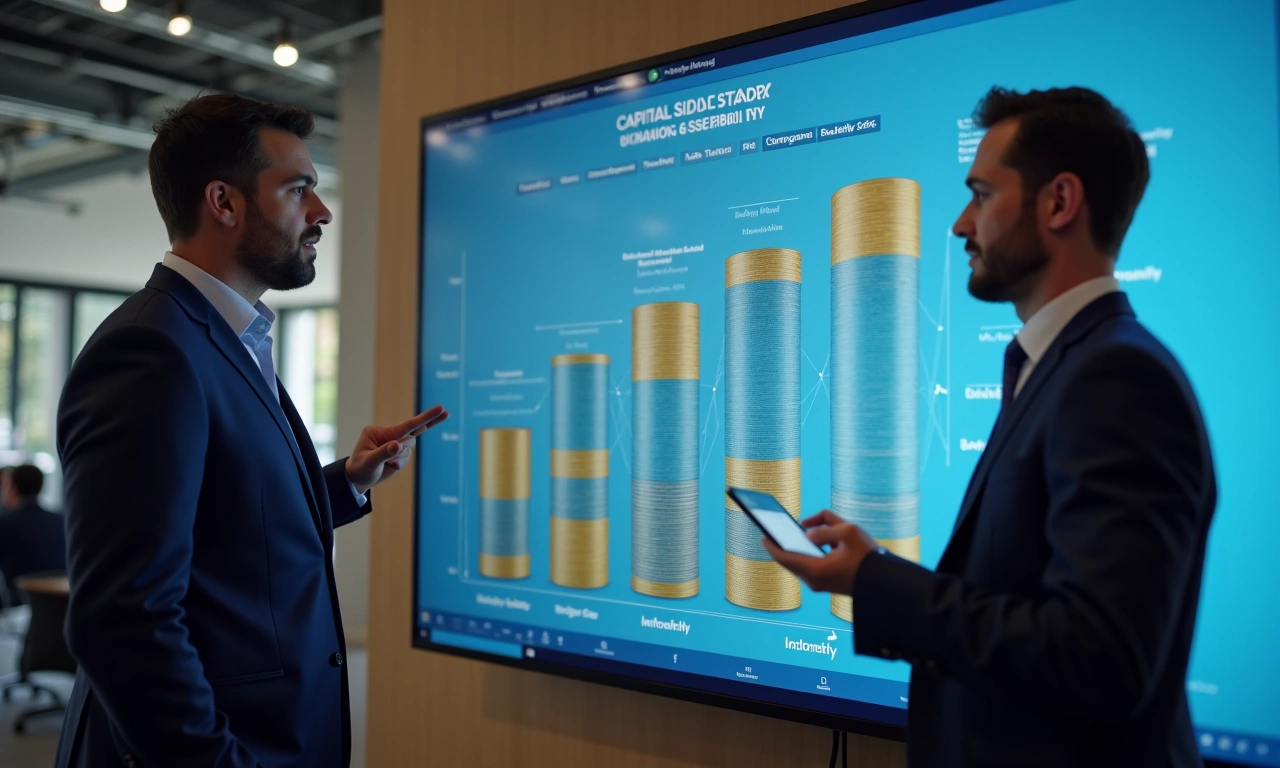
For a $15M project, a typical mezz layer of $1.5M at 12% for 3 years adds $540K of annual interest (or accrued) to project costs. This must be modeled in your pro forma before presenting to LP equity partners, as it directly affects LP returns. The mezzanine layer in our sample deal (see chart above) represents 10% of TPC.
Step 5: Size LP and GP Equity
After senior debt and mezzanine are sized, the remaining gap is the common equity requirement — filled by LP investors (typically 80% of the equity stack) and the GP co-investment (10–20% of the equity stack). In our $15M example, after $9.75M senior and $1.5M mezz, the remaining $3.75M in equity is split $3.0M LP / $0.75M GP.
LP equity is the capital that Pillar Partners and institutional JV partners provide. This capital participates in the waterfall: first receiving a preferred return (typically 8–10% per annum on invested capital), then sharing residual profits with the GP in an agreed split. The GP co-investment signals alignment and is typically required at 5–20% of the equity requirement, depending on the institutional program.
For a complete walkthrough of the real estate capital stack concept, see our Capital Stack Explained guide.
Returns Modeling: $15M North Fulton Multifamily Example
The following table models expected returns by capital stack layer for a $15M North Fulton multifamily project with a 4-year hold and $3.5M total profit at exit:
| Layer | Amount | % of TPC | Rate / Return | Total Return |
|---|---|---|---|---|
| Senior Debt | $9,750,000 | 65% | 7.5% interest | $2,925,000 interest |
| Mezzanine | $1,500,000 | 10% | 12% accrued | $720,000 accrued |
| LP Equity | $3,000,000 | 20% | 9% pref + 80% residual | ~$4.2M total (1.4x) |
| GP Equity | $750,000 | 5% | 20% residual carry | ~$0.85M total (1.1x) |
Note: Returns are illustrative for a base-case scenario. Actual returns depend on construction performance, lease-up timing, exit cap rate, and market conditions. Not a guarantee of investment performance.
Quick Check
See what capital you qualify for in under 3 minutes.
No origination fees for initial capital review. Institutional structures available.
Check Capital Eligibility →Frequently Asked Questions
What is LTC in real estate development?▾
What is a construction contingency and how much should I budget?▾
How much do LP investors expect to earn in a Georgia development JV?▾
What size gap does mezzanine financing typically fill?▾
Do I need a separate entity for each layer of the capital stack?▾
Disclaimer: This article is for informational purposes only and does not constitute investment, legal, or financial advice. All returns and projections are illustrative and not a guarantee of performance. Consult qualified professionals before making investment decisions.
Ready to access institutional JV capital for your next deal?
Pillar Partners connects qualified operators with institutional capital for joint ventures, mezzanine financing, and bridge loans across North Fulton County, GA. No origination fees for initial submissions.
Affiliate disclosure: Pillar Partners may earn a referral fee when you access capital through our partners. See our full disclosure policy.
Begin Capital Review →