Forsyth County is Georgia's fastest-growing county, and Cumming — its county seat — is the epicenter of that growth. For operators working with Pillar Partners to deploy institutional capital in the Atlanta MSA's northern growth corridor, Cumming represents a rare combination: a high-velocity population growth engine, a competitive 7.76 mill tax rate, and a Lake Lanier proximity premium that no competing submarket can replicate.
The city itself is relatively compact at approximately 10,000 residents — but it serves as the commercial, civic, and financial hub for a county of 440,000 and growing. This county-seat dynamic means that retail, industrial, multifamily, and mixed-use demand in Cumming is anchored by a population base that is an order of magnitude larger than the city limits suggest, creating durable NOI assumptions that institutional LP capital can underwrite with confidence.
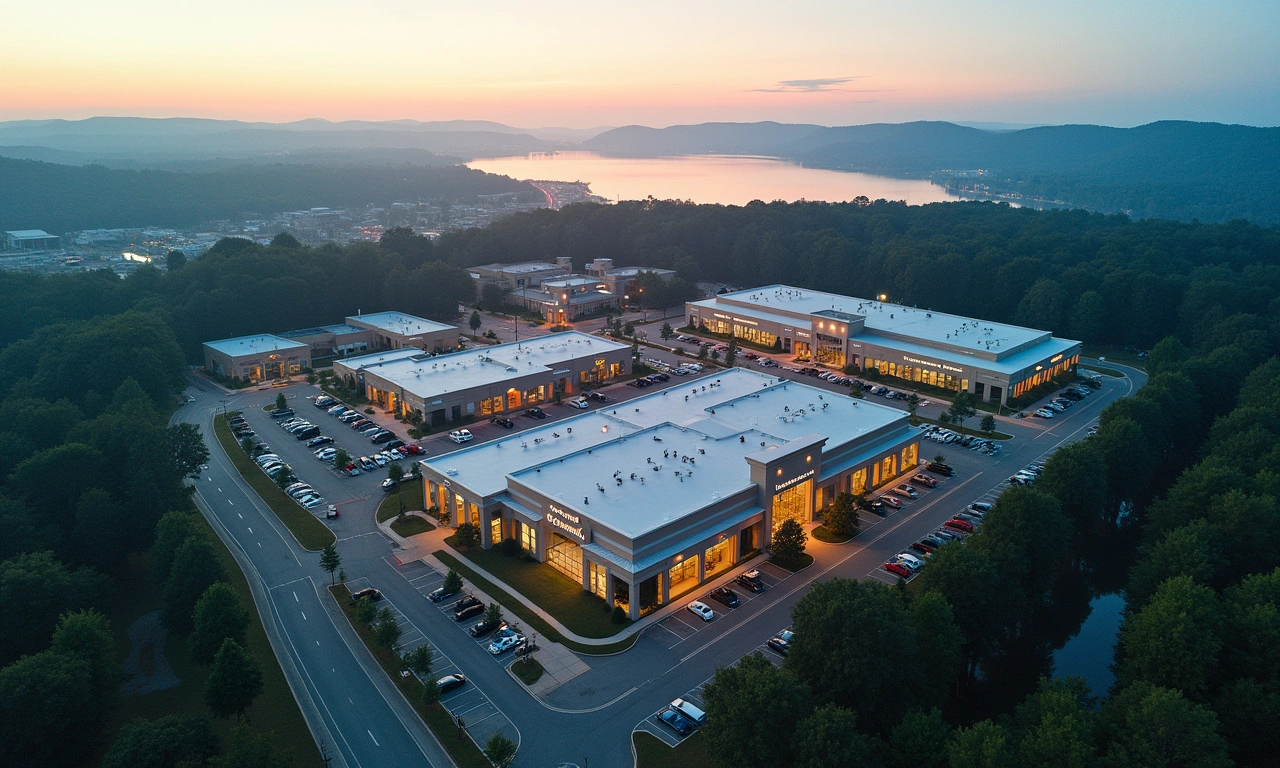
Forsyth County's Growth Engine: Why Capital Is Moving to Cumming
Forsyth County's population growth from approximately 225,000 in 2018 to a projected 440,000 by 2026 represents a near-doubling in eight years — a growth rate that produces structural undersupply in every major real estate asset class simultaneously. Retail follows rooftops; multifamily follows job growth; industrial follows logistics demand; and all three are present in Cumming in compressed form because the county seat absorbs disproportionate commercial demand relative to its residential footprint.
Research from the UGA Terry College of Business Real Estate Program consistently highlights Forsyth County as one of Georgia's most capital-attractive suburban growth markets, noting that the combination of household income growth, limited historical supply, and proximity to the Alpharetta technology corridor creates the conditions for sustained cap rate compression. For JV equity investors, cap rate compression is the exit multiple driver — and Forsyth County's trajectory supports that thesis more than almost any other Georgia submarket in 2026.
"Forsyth County added more net new residents per square mile than any other Georgia county from 2020 to 2025. Every operator who missed that window is now paying 2026 prices for 2020 opportunities."
Forsyth County Tax Environment: 7.76 Mills
Forsyth County's property tax rate of 7.76 mills is the second-lowest in the 10-city comparison set tracked by Pillar Partners, according to published data from the Forsyth County Tax Commissioner. At 7.76 mills, Cumming operators pay approximately 47% less in property taxes than comparable Gwinnett County assets (14.71 mills) and 42% less than DeKalb County assets (13.35 mills).
In a high-growth market where lease escalations and improving NOI are the primary return drivers, a lower base tax rate means that rent growth flows more directly to LP distributions rather than being absorbed by rising tax obligations. For deal structures targeting a 5-year hold, the cumulative tax savings versus a Gwinnett comparable can represent 8–12% of total equity returned — a meaningful enhancement to the LP equity multiple.

Lake Lanier Proximity: The Premium Asset Angle
Lake Lanier's proximity to Cumming — the western shore of the reservoir lies within minutes of the city's commercial core — creates a premium asset class that does not exist in any competing submarket in the comparison set. Resort and hospitality JV structures for Lake Lanier-adjacent properties have demonstrated consistent 15–25% rent premium over comparable inland assets, and the amenity premium extends to multifamily and mixed-use development that markets the lake access as a differentiator.
For institutional JV equity, the Lake Lanier proximity thesis is most compelling for hospitality, short-term rental multifamily, and mixed-use development within a 2-mile radius of marina access points. These assets support higher entry cap rate assumptions on acquisition (because the hospitality income stream introduces volatility) while delivering superior long-term appreciation as the premium becomes more recognized by institutional buyers at exit.
JV Equity and Bridge Capital for Cumming Acquisitions
Cumming's high-velocity growth environment favors rapid deployment — the operators who underwrite decisively and close quickly capture the acquisitions before the market reprices. Our bespoke equity matching program and institutional bridge loan program are designed to work in tandem: bridge capital provides the acquisition certainty that Forsyth County deals demand, while bespoke LP equity provides the long-term hold structure that maximizes the growth trajectory return.

Mezzanine Financing for Forsyth County's High-Growth Deals
The high-growth dynamic in Forsyth County creates deal structures that often require leverage above the senior debt ceiling — particularly for ground-up development where future NOI is being underwritten at current growth assumptions rather than trailing income. Mezzanine financing at 65–80% LTV provides this additional leverage layer, enabling operators to preserve equity while capturing the full growth trajectory return.
Construction standards for new development in Cumming are informed by NIST Building Standards, which underpin the local building code requirements for commercial and multifamily construction in Forsyth County. Mezzanine lenders deploying into high-growth markets like Cumming require construction specification review as part of their underwriting process, with particular attention to structural standards for podium and mid-rise construction types common in the county seat's commercial core.
Infographic
Cumming, GA — Capital Stack Quick Reference
Data Visualization