Dunwoody's Perimeter Center submarket is the conversion capital of the Atlanta MSA — a 26% Class-B office vacancy rate has created the most compelling office-to-residential JV equity opportunity in the region, and operators who understand how to engineer the capital structure for complex adaptive conversion projects are generating returns that are unavailable in lower-vacancy markets. Operators working with Pillar Partners approach the Perimeter Center thesis as a specific capital deployment strategy, not a general opportunistic play: the market dynamics that create this opportunity are structural, not cyclical, which means the window for acquiring at distressed-office prices and converting to residential income will close as the conversion pipeline absorbs the available inventory.
Dunwoody occupies a gateway position in the Atlanta MSA: it is the southernmost market in the North Fulton-to-Perimeter corridor, directly connected to Buckhead and the Atlanta urban core via I-285 and the MARTA Gold Line. This connectivity premium is the fundamental demand driver for residential conversion product in the Perimeter Center submarket — residents who convert from suburban commuter to urban-adjacent transit-connected multifamily are making a lifestyle choice that the Perimeter Center uniquely supports in the northern Atlanta suburbs.
"Dunwoody's 26% Class-B office vacancy rate is not a liability — for operators with the right capital partner, it is the defining arbitrage of the current cycle."
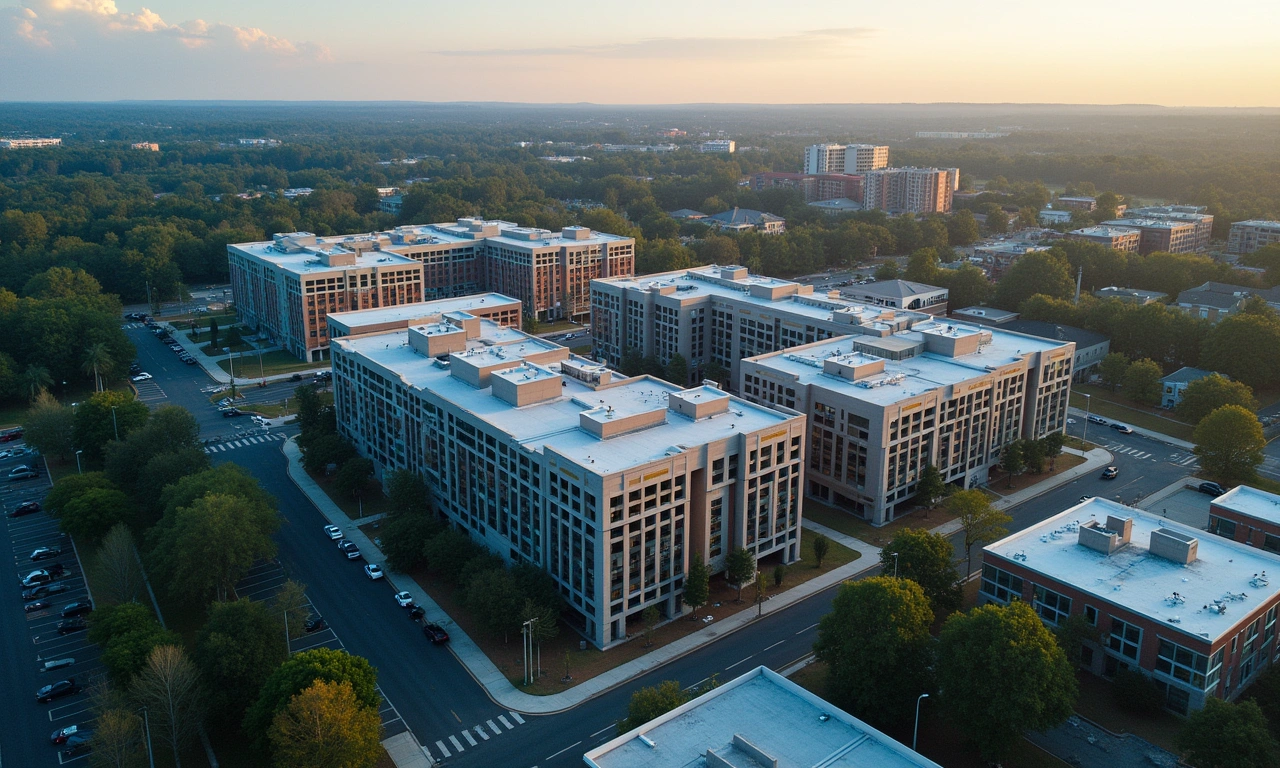
Perimeter Center: The Office-to-Residential Conversion Thesis
Perimeter Center's office vacancy reached 26% in 2024 — a figure that reflects the structural shift away from suburban Class-B office that has accelerated since 2020 and shows no sign of reversing on any medium-term forecast horizon. This vacancy level creates JV conversion opportunities because it pushes acquisition prices for distressed office assets below replacement cost, enabling operators to acquire the land and building envelope at a basis that makes the conversion economics work. Georgia State University Real Estate Research has extensively documented the office-to-residential conversion pipeline in Atlanta-area suburban markets, providing the demand benchmarking that institutional capital sources require to underwrite Perimeter Center conversion projects.
The conversion thesis is straightforward: acquire Class-B office at $85 to $130 per square foot (versus $200+ per square foot replacement cost for new multifamily), convert the building envelope to residential using a JV equity structure, and deliver a multifamily product at a total cost basis that is competitive with purpose-built multifamily in the Perimeter Center submarket. The key variable is the conversion cost per unit, which in Dunwoody runs $60,000 to $90,000 per unit depending on the building's existing structural system and the residential amenity package required by the target tenant. This per-unit conversion cost, when added to an acquisition basis at distressed-office pricing, typically produces a total development cost that supports a 5.5% to 6.5% residential cap rate at exit — a spread over the 10-year Treasury that institutional buyers will pay for newly converted multifamily at a transit-connected location.

JV Equity Structures for Office Conversion Projects
Office-to-residential conversion JV equity structures in Dunwoody typically run at 65% to 70% LTV on the acquisition component, with the construction draw facility on top, producing a total leverage ratio of 75% to 80% of total project cost at the peak construction period. This is a higher-leverage structure than a standard commercial acquisition, reflecting the development risk inherent in the conversion process. The preferred return on the LP equity layer typically runs 9% to 11%, compensating for the higher conversion execution risk. Our bespoke equity matching process connects Dunwoody conversion operators with LP capital sources whose return parameters and risk tolerance are calibrated specifically to the office conversion asset class.
The GP equity contribution in a Perimeter Center conversion project typically runs 15% to 20% of total project cost — higher than a standard acquisition JV because institutional LP capital sources require a greater alignment mechanism in conversion deals where the operator's construction execution risk is higher. The GP contribution is often structured as a combination of cash equity and deferred developer fees, creating a structure that rewards the operator's skill in executing the conversion while ensuring that LP capital is first-loss protected during the construction phase. All capital structure figures cited here are illustrative only and do not constitute investment advice.
DeKalb County Tax Environment
DeKalb County's effective millage rate of 13.35 mills — as reported by DeKalb County Property Appraisal — is the highest in our 10-city North Atlanta comparison set, sitting above Fulton County's 11.74 mills and significantly above Cherokee County's 5.70 mills. For Dunwoody conversion operators, the 13.35-mill burden is a critical NOI variable that must be carefully modeled. On a $5 million assessed multifamily asset, the DeKalb tax line represents approximately $66,750 per year — approximately $400 to $500 per unit per year in additional operating cost relative to a Fulton County asset at the same valuation.
This tax burden is the reason Dunwoody conversion projects require careful cap rate underwriting. The 13.35-mill environment compresses exit NOI relative to the Fulton County comparison set, which means the acquisition basis on the distressed office asset must be low enough to absorb the tax drag while still producing the conversion spread that makes the JV equity return work. Operators who model this correctly — pricing in the 13.35-mill tax environment at the acquisition stage rather than the exit stage — consistently outperform operators who discover the tax impact late in the underwriting process. NIST Building Standards provide the structural assessment framework that conversion lenders require to confirm that the existing office building envelope meets residential conversion structural requirements, a critical due diligence step before committing to DeKalb County's tax environment.
Bridge Financing for Dunwoody Acquisitions
Bridge financing for Dunwoody office conversion acquisitions requires a structure that is specifically designed for the conversion timeline — typically 24 to 30 months from acquisition to stabilized residential occupancy. Our institutional bridge loan program structures Dunwoody conversion facilities with the extended construction draw period and conversion-specific covenant packages that office-to-residential projects require. The rate range for Dunwoody conversion bridge capital in 2026 runs 11% to 13%, reflecting the extended timeline and higher construction execution risk of full building conversion relative to cosmetic renovation or value-add repositioning.
A well-structured Dunwoody conversion bridge facility separates the acquisition bridge from the construction draw facility, allowing the operator to close the acquisition at a lower rate on the initial acquisition advance and then draw the construction facility as conversion milestones are achieved. This phased structure reduces total interest carry during the early acquisition and permitting phase, before construction costs accelerate and the draw facility begins advancing. Operators who pre-negotiate the construction draw milestone schedule with the lender before closing the acquisition bridge consistently close deals faster than operators who attempt to restructure the facility mid-conversion.
Mezzanine Capital for Conversion Projects
Mezzanine financing for Dunwoody office conversion projects occupies the 65% to 80% leverage band — the gap between senior debt capacity and total project cost that is too large for GP equity alone to fill in a high-cost conversion market. Our complete mezzanine financing guide covers the conversion-specific structures that apply to Perimeter Center deals, with attention to the intercreditor dynamics between the senior construction lender and the mezzanine preferred equity provider in a conversion capital stack.
Mezzanine capital for Dunwoody conversion projects in 2026 is available at preferred return rates in the 11% to 14% range, reflecting the elevated conversion execution risk relative to standard commercial acquisition. The mezzanine provider typically requires a completion guarantee from the GP and an independent construction monitor to confirm conversion milestones, which are reasonable protections given the DeKalb County tax environment and the structural complexity of office-to-residential conversion. Access capital for your Dunwoody conversion project through our capital access portal for a 48-hour review.
Infographic
Dunwoody Conversion Capital Stack Quick Reference
Data Visualization
Dunwoody Perimeter Center — Office Vacancy vs. Conversion Pipeline 2021–2026
* Conversion Pipeline in units ÷ 10 for scale comparison. Illustrative estimate only. Not investment advice.