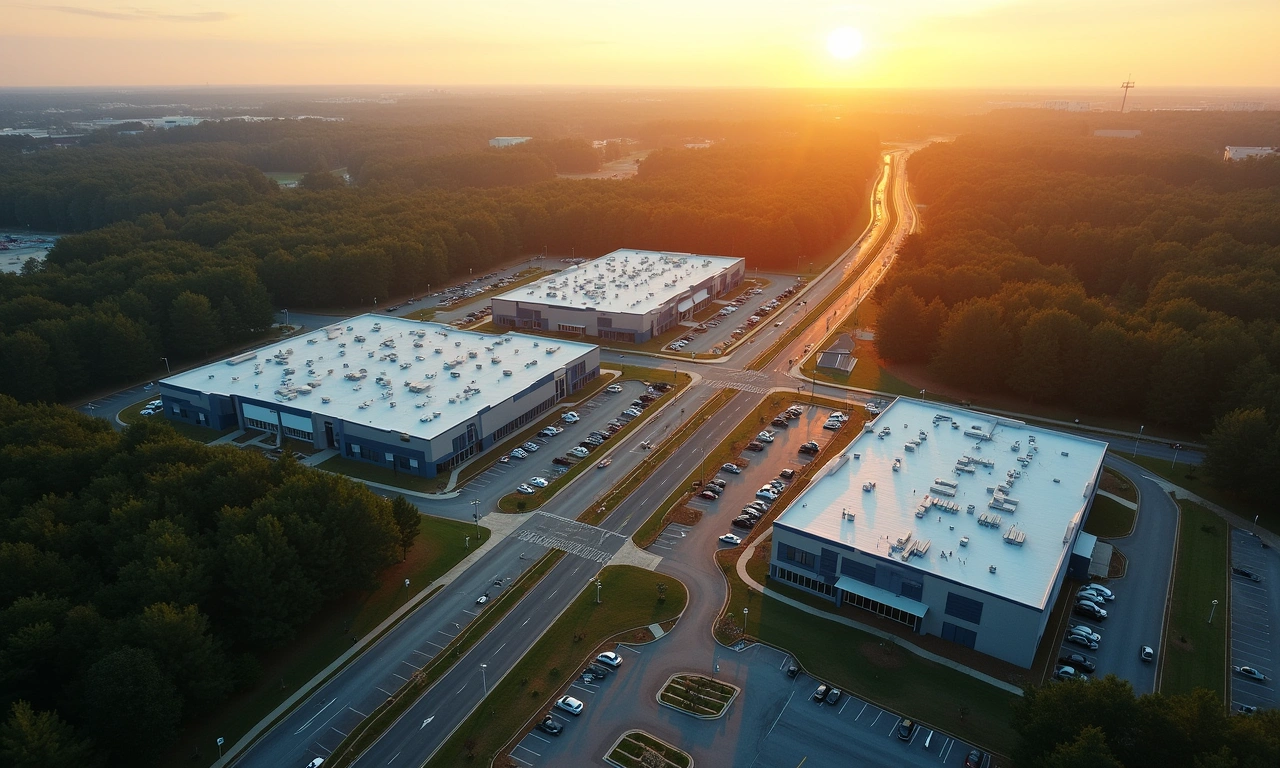
Holly Springs is the highest-growth JV capital frontier in the Milton-area market — a Cherokee County city that is absorbing population and commercial demand at rates that rival the Alpharetta growth cycle of the early 2000s, but at a tax burden and land basis that Alpharetta operators could only dream of. Operators working with Pillar Partners treat Holly Springs as the greenfield JV opportunity of the current North Atlanta cycle: where Cherokee County's 5.70-mill effective tax rate, abundant land availability, and accelerating permit volume converge to create the highest potential NOI yield per dollar of invested equity in the entire region.
Holly Springs is Cherokee County's fastest-growing city by absolute permit volume, having added residential and commercial development at a pace that has consistently exceeded its own capacity projections over the past five years. The combination of US-92 corridor commercial frontage, proximity to the Woodstock mixed-use market, and direct I-575 interstate access creates a market that is more urban in its commercial potential than a rural Cherokee County address would suggest. This intelligence guide covers the capital structure mechanics, Cherokee County tax environment, and growth data that qualified operators need to evaluate Holly Springs JV equity and bridge capital opportunities in 2026.
"At 5.70 mills, Cherokee County's effective property tax burden is less than half of Gwinnett County's. That 9-point spread adds $90,000 per year in NOI on a $1 million assessed asset."
Cherokee County's Tax Advantage: 5.70 Mills
Cherokee County's 5.70-mill effective property tax rate — as reported by the Cherokee County Tax Commissioner — is the lowest in our 10-city North Atlanta comparison set by a significant margin. The comparison is instructive: Gwinnett County at 14.71 mills, DeKalb County at 13.35 mills, and Fulton County at 11.74 mills all sit well above Cherokee's 5.70, and even Forsyth County — another low-tax northern Atlanta county — carries approximately 7.76 mills compared to Cherokee's 5.70. This 9.01-mill spread between Holly Springs and Gwinnett County is not a minor detail; it is a structural NOI advantage that fundamentally changes the underwriting math for commercial real estate in Cherokee County.
The direct NOI impact is substantial. On a $1 million assessed commercial asset, the difference between Holly Springs at 5.70 mills and Gwinnett at 14.71 mills translates to approximately $90,100 per year in lower property tax expense — effectively $90,000 per year in additional NOI that requires no additional revenue or operational efficiency. At a 7% cap rate, that $90,000 of additional NOI represents approximately $1.29 million of additional asset value compared to an identical asset in Gwinnett County. For operators who source deals in Cherokee County at Gwinnett-comparable rent levels, this tax advantage is pure arbitrage — a structural yield premium that flows directly to the JV equity return without requiring any additional management intensity or rent premium relative to the Gwinnett market.
Holly Springs Growth Pipeline: Why Capital Is Moving North
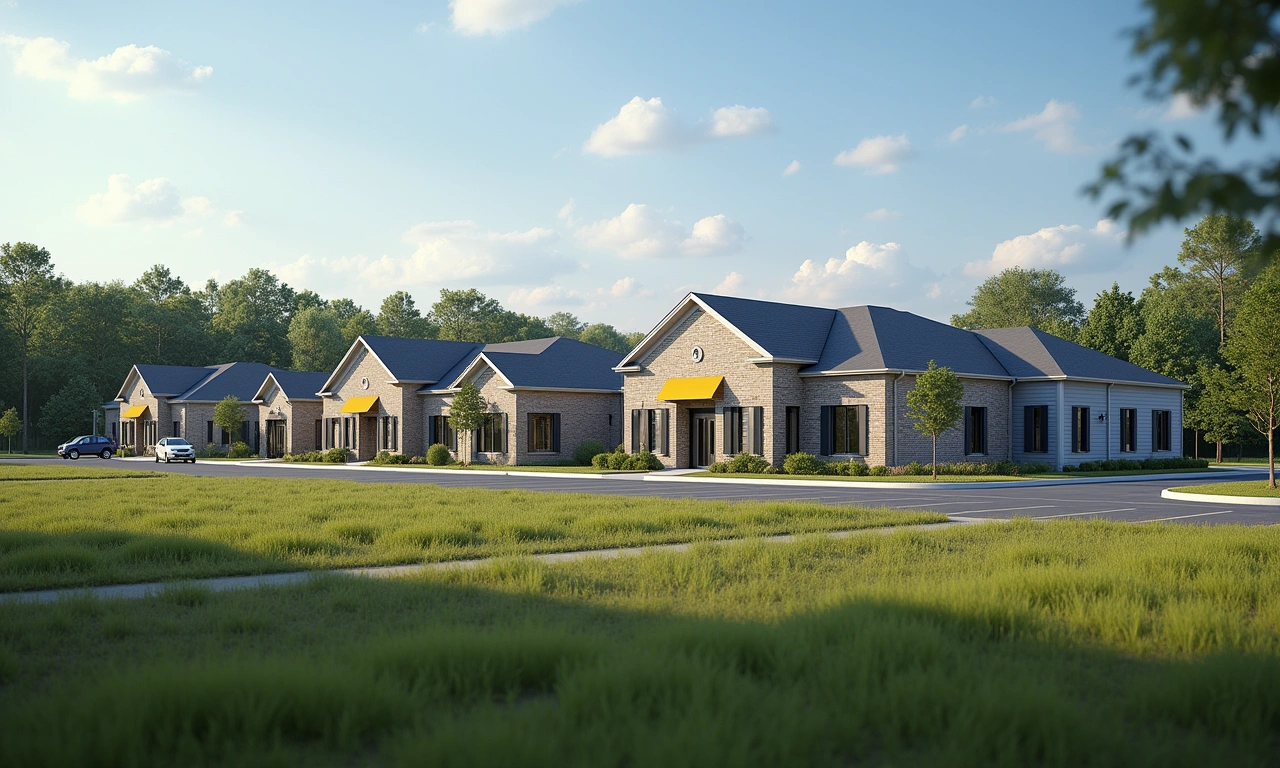
Holly Springs issued approximately 312 residential building permits in 2024 — a 15% increase over the prior year and part of a five-year compound growth trajectory that has seen the city's residential permit volume more than double since 2021. This residential demand is the foundation for the commercial follow-through that creates JV equity opportunities: every 100 new households in Holly Springs generates demand for approximately 15,000 to 20,000 square feet of neighborhood-serving retail, medical office, and service commercial space, a well-documented demand multiplier that Georgia State University Real Estate Research has benchmarked across comparable high-growth suburban markets in the southeastern United States.
The commercial permit data confirms that retail and service commercial is following the residential wave. Holly Springs issued approximately 34 commercial permits in 2024, up from 12 in 2021 — nearly a 3x increase in three years. The 2026 projection of 50 commercial permits would represent the highest single-year commercial permit volume in Holly Springs history, reflecting the absorption of the US-92 commercial corridor and the development of ancillary commercial nodes around the major residential subdivision centers that are filling in Cherokee County's residential land supply. All permit projections are illustrative estimates only and do not constitute guaranteed market outcomes.
Greenfield JV Equity Structures for Cherokee County
Greenfield JV equity structures for Holly Springs commercial development differ from value-add acquisition structures in one important dimension: the development risk is higher because there is no in-place income stream during the entitlement and construction period, which means the LP capital source must underwrite to a development return rather than an acquisition return. The typical greenfield JV equity structure for a Holly Springs commercial development runs at 65% LTV on the land plus construction facility, with an institutional preferred equity layer at 9% to 10% preferred return and a 4 to 5 year hold period to allow for entitlement, construction, and stabilization. Our bespoke equity matching process connects Holly Springs operators with LP capital sources who have specific appetite for Cherokee County greenfield development at these return parameters.
The Cherokee County tax advantage directly improves the underwriting case for greenfield JV structures. Because the stabilized NOI on a Holly Springs commercial property will benefit from a 5.70-mill tax environment rather than the 11.74 mills to 14.71 mills that comparable assets in Fulton, DeKalb, or Gwinnett counties carry, the stabilized cap rate on a Holly Springs greenfield development can be lower than the comparable project in a higher-tax county while still delivering the same LP preferred return — because the tax-adjusted NOI is higher at the same gross income level. This is the specific mechanism by which the Cherokee County tax advantage translates into superior equity returns for operators who structure their JV capital correctly. All capital structure figures cited are illustrative only and do not constitute investment advice.

Bridge Financing for Holly Springs Acquisitions
Bridge financing for Holly Springs commercial acquisitions typically runs 18 months for a standard acquisition-to-stabilization play — shorter than the extended bridge timelines required in Dunwoody conversion projects because Holly Springs commercial deals generally involve new construction or light value-add repositioning rather than complex structural conversion. Our institutional bridge loan program includes Cherokee County-specific structures that account for the county's permit processing timeline and the longer construction period for greenfield commercial development on previously undeveloped land.
The rate range for Holly Springs bridge capital in 2026 runs 10% to 12% depending on LTV and project type, consistent with the broader North Atlanta bridge market. The 5.70-mill Cherokee County tax environment means that the stabilized NOI on a Holly Springs property — used to underwrite the bridge loan repayment at exit or refinance — is higher on a tax-adjusted basis than comparable properties in Fulton or DeKalb counties, which can improve the underwriting case for the initial LTV and rate. NIST Building Standards provide the construction quality framework that bridge lenders require for Cherokee County commercial development projects, ensuring that the new-build product delivered to the market meets the institutional quality standards required for permanent financing at exit.
Mezzanine Capital for Higher-Leverage Holly Springs Deals
Mezzanine financing for Holly Springs greenfield commercial development is particularly valuable when the development budget exceeds what senior construction debt alone can fund at a workable LTV on the land and projected building value. For larger Holly Springs commercial developments above $5 million in total project cost, the mezzanine preferred equity layer provides the additional capital between senior debt capacity and total project cost, at preferred return rates in the 10% to 13% range. Our complete mezzanine financing guide covers the Cherokee County-applicable structures for greenfield development mezzanine.
The Cherokee County tax advantage also improves the mezzanine underwriting case, because the lower tax burden means the stabilized property's NOI is higher on an after-tax basis, which supports a higher total project value at the mezzanine provider's underwritten cap rate. Operators who understand and can articulate this tax-adjusted underwriting logic to mezzanine capital sources consistently achieve better mezz terms on Holly Springs deals than operators who present the deal on gross NOI without tax-adjusting the comparison. Access the capital network for your Holly Springs deal through our capital access portal for a 48-hour capital review.
Infographic
Holly Springs Capital Stack Quick Reference
Data Visualization
Holly Springs Annual Permit Volume — Residential & Commercial 2021–2026
* Illustrative estimate based on Cherokee County growth trend data. Not investment advice. 2026 is projected.