Peachtree Corners is the nation's first designated Smart City — a distinction that is not merely symbolic but reflects a fundamentally different real estate product type than any other market in the Atlanta MSA. For operators working with Pillar Partners to deploy institutional capital into the Southeast's most innovation-dense corridor, Peachtree Corners offers technology-grade tenants, a $39/sqft NNN rent ceiling that is more than double the county average, and an institutional buyer pool that extends well beyond Georgia's borders.
The city was incorporated in 2012 around Technology Park Atlanta — the largest office park in Georgia at approximately 500 acres — and has since grown a Smart City Innovation District that includes live autonomous vehicle testing, 5G infrastructure deployment, and a curated technology tenant base that commands the highest office rents in Gwinnett County by a significant margin. For institutional JV equity, this tenant quality profile is the foundational underwriting advantage.
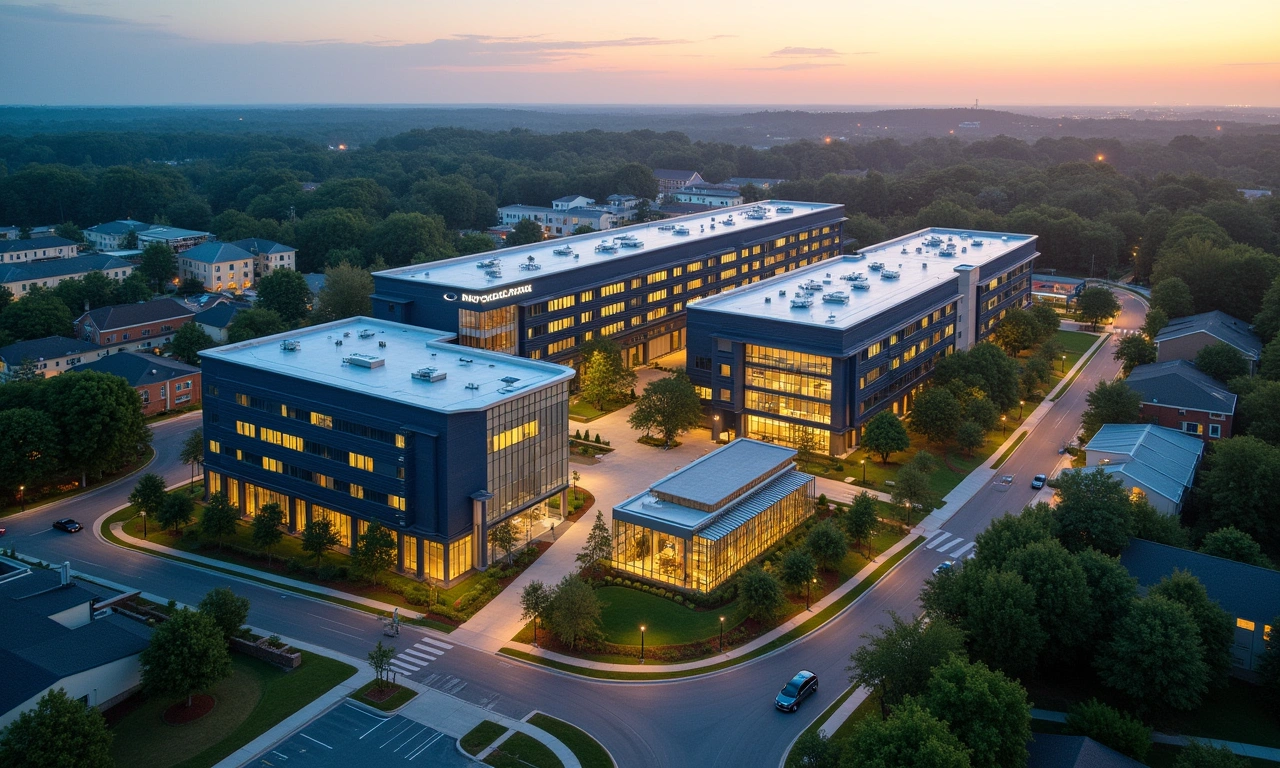
Peachtree Corners Innovation District: The Institutional JV Case
The Smart City infrastructure investment in Peachtree Corners — autonomous vehicle corridors, smart traffic management, IoT sensor networks, and 5G deployment — has created a physical environment that technology tenants specifically seek out as a signal of operational modernity. Technology Park North and South collectively contain millions of square feet of office and R&D space, anchored by Fortune 500 technology subsidiaries, defense contractors, and high-growth software companies that require the Smart City infrastructure as a prerequisite for their operations.
Research from the UGA Terry College of Business Real Estate Program identifies innovation-district office assets as one of the most durable institutional real estate product types, noting that technology-grade tenants typically sign longer leases, execute fewer early terminations, and pay higher rents per square foot than comparable non-technology office tenants. For JV equity investors, this translates to lower LP risk on the income assumption and a wider margin for tax-load absorption — a critical consideration given Gwinnett County's 14.71 mill rate.
"A technology-grade tenant paying $39/sqft NNN in Peachtree Corners more than doubles the rent coverage of a comparable suburban office tenant — making the 14.71 mill rate a non-issue in a properly structured JV."
Technology Park Rent Premium: 55% Above County Average
The technology corridor NNN rent trajectory in Peachtree Corners — from $28.40/sqft in 2021 to a projected $39.50/sqft in 2026 — represents a 39% rent increase over five years, compared to 15% for standard Gwinnett office during the same period. This divergence is the rent defensibility story that makes Peachtree Corners assets attractive to institutional buyers at exit: a tenant base paying 55% above the county average is not a market-timing anomaly — it is a structural premium anchored in Smart City infrastructure that competitors cannot replicate without equivalent capital investment.
For LP underwriting, the rent defensibility argument supports a tighter exit cap rate assumption than comparable suburban office would justify. A 5.5–6.0% exit cap on technology corridor NNN assets in Peachtree Corners, versus 6.5–7.0% for standard Gwinnett office, is defensible to institutional buyers — and that 100 basis point delta in exit cap rate directly translates to a 15–20% increase in exit valuation for a stabilized asset.

Gwinnett County's 14.71 Mills: Mitigating Tax Burden Through Premium Assets
Gwinnett County's 14.71 mill property tax rate — the highest in the 10-city comparison set, per the Gwinnett County Tax Commissioner — is a cost that all Gwinnett County operators must underwrite. In standard Gwinnett office, where rents average $24–25/sqft NNN, the 14.71 mill rate can consume 20–25% of gross rent revenue on a stabilized asset. In the Peachtree Corners technology corridor, where rents average $39/sqft NNN, the same tax load represents approximately 12–13% of gross revenue — a dramatically more manageable burden.
This is the structural argument for deploying into premium Peachtree Corners assets over commodity Gwinnett office: the tax load is fixed in dollar terms but variable as a percentage of revenue, and the premium revenue base in the innovation district makes the fixed tax burden materially less impactful on LP returns. Properly structured JV agreements that account for the full 14.71 mill load at the asset level — with LP preferred returns sized to the net NOI after taxes — produce predictable LP distributions even in a high-mill-rate environment.
JV Equity Structures for Innovation District Assets
Innovation district office assets in Peachtree Corners typically require equity stacks calibrated to institutional buyer expectations at exit — which means the JV structure must be designed from the outset with the eventual sale to an institutional REIT or private equity fund in mind. Our bespoke equity matching program structures these deals with LP preferred equity at 8–9% returns, GP promotes in the 20–25% range, and waterfall mechanics that are transparent to both institutional LPs and prospective institutional buyers who will conduct their own underwriting at exit.

Bridge and Mezzanine Capital for Peachtree Corners Deals
Technology corridor assets in Peachtree Corners often present as repositioning opportunities — older Technology Park buildings where lease roll creates an opportunity to upgrade to Smart City-compatible specifications and re-lease at current market rents. Our institutional bridge loan program provides the acquisition-to-repositioning capital for these plays, with mezzanine financing available at the 65–80% LTV layer for deals requiring maximum leverage during the repositioning window.
Construction and renovation standards for technology-grade office in Peachtree Corners are informed by NIST Building Standards, particularly for the electrical, mechanical, and structural specifications that technology tenants require in Smart City-compatible facilities. Mezzanine lenders underwriting technology corridor repositioning deals in Peachtree Corners conduct specific technical due diligence on the post-renovation specification to confirm that the building will qualify for technology-grade tenant requirements at the time of stabilization.
Infographic
Peachtree Corners — Innovation District Capital Stack Reference
Data Visualization