Roswell is the most established submarket in North Fulton County — a city of 92,000 residents that combines the highest historic building inventory in the region with a river corridor development frontier that is only beginning to absorb institutional capital. Operators working with Pillar Partners in Roswell navigate a dual-market reality: the Historic Canton Street district, where adaptive reuse and Historic Tax Credit stacking create capital structures unique to this submarket; and the Chattahoochee River corridor, where new-build mixed-use and residential development is generating fresh JV equity demand.
Roswell's scale — the largest city in North Fulton by population — means that both demand sets are substantial. The Canton Street corridor supports a year-round dining, retail, and hospitality economy that creates durable commercial income at cap rates that have compressed steadily from 6.2% in 2021 toward the low 5% range in 2026. The river corridor adds a new-build component that commands new-build cap rates currently in the 5.5% range — still 80 to 100 basis points above comparable Alpharetta product, meaning entry-point yield is still available for operators who move ahead of the market.
"Roswell's historic fabric creates a capital stacking opportunity unique in North Fulton — HTC + preferred equity + senior debt can fund an adaptive reuse project at near-zero out-of-pocket operator cost."
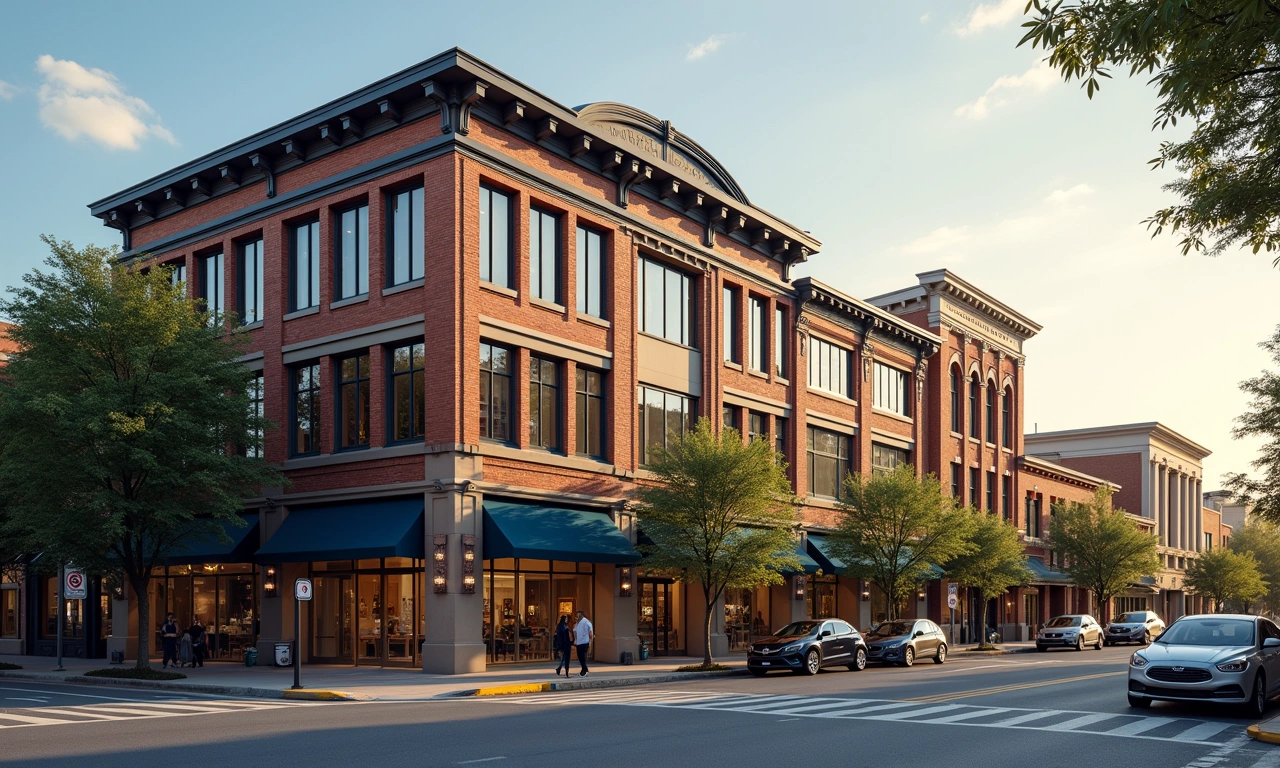
Canton Street Historic District: The Adaptive Reuse Opportunity
Canton Street's Historic District contains the highest concentration of pre-1940 commercial structures in North Fulton County — a building inventory that is not merely architecturally significant but financially valuable, because structures of this age and designation qualify for Federal Historic Tax Credit (HTC) stacking under Internal Revenue Code Section 47. For an operator who understands how to structure an HTC transaction, these buildings represent a capital opportunity that competitors without historic finance experience cannot access. Our detailed analysis of historic district restoration financing covers the full HTC stacking mechanics for operators new to this capital structure.
The HTC stacking structure for a Canton Street adaptive reuse project typically works as follows: the 20% Federal HTC, generated by the qualifying rehabilitation expenditure, is sold to a tax credit investor who contributes equity in exchange for the credit allocation. This tax credit equity effectively replaces a portion of what would otherwise be the operator's GP equity contribution, allowing the operator to preserve equity capital while still meeting the deal's funding requirements. When stacked with institutional preferred equity from an LP capital source at an 8% to 9% preferred return rate, and with senior debt at the appropriate LTV, the resulting capital structure can fund a Canton Street adaptive reuse project at a total cost basis that is competitive with new-build product — a structural advantage that makes Roswell's historic inventory unusually attractive for operators with the right capital partners.
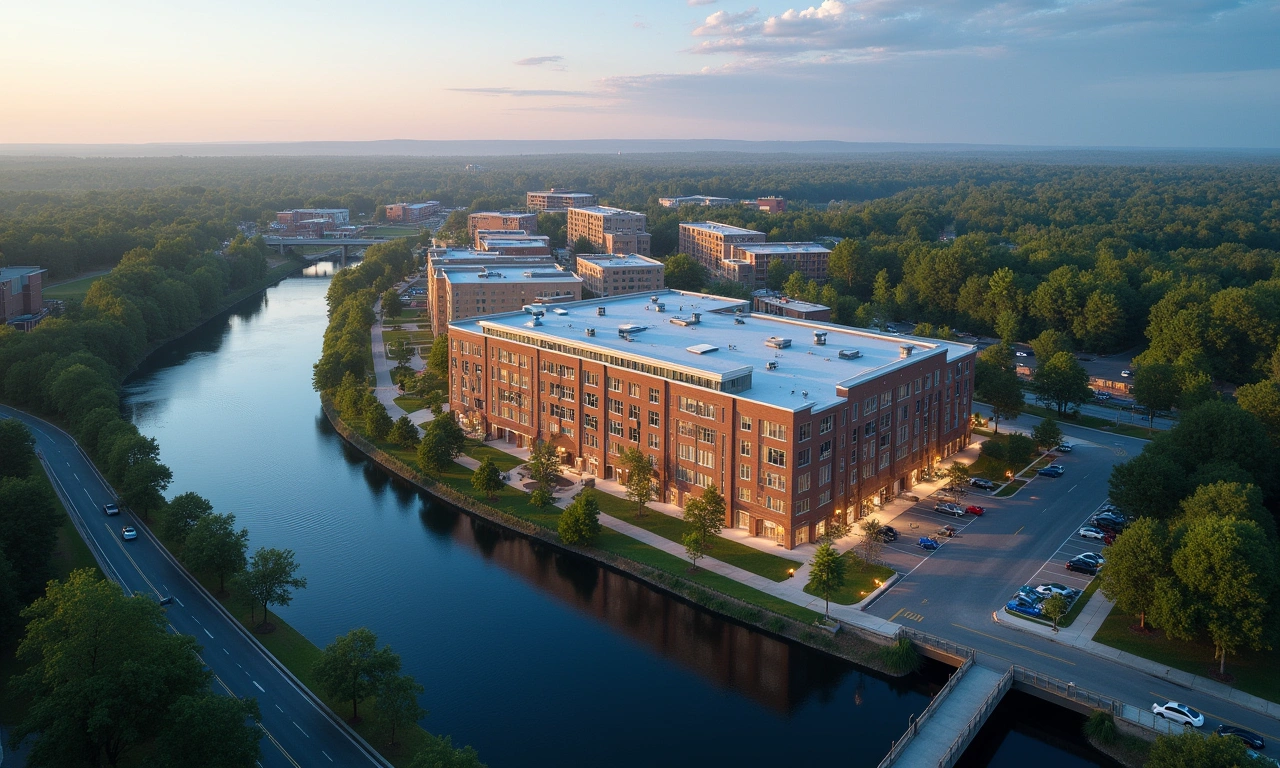
Chattahoochee River Corridor: New Development JV
The Chattahoochee River corridor on Roswell's western boundary — extending from Riverside Road south to the Azalea Park area — represents a distinct and newer JV equity opportunity compared to the Canton Street historic core. River corridor development in Roswell benefits from a combination of state-level water quality incentive programs, city master-plan support for mixed-use riverfront development, and the natural amenity premium that water-adjacent residential and hospitality product commands in an affluent suburban market.
JV equity structures for river corridor development in Roswell typically run at 65% to 70% LTV senior debt with an institutional preferred equity layer in the 8.5% to 9.5% range, reflecting the slightly higher entitlement and environmental review risk of river-adjacent development. The hold period for these projects extends to 4 to 5 years given the longer construction timeline and the need to establish the corridor as a recognized destination before achieving exit-cap-rate-based sale proceeds. Georgia State University Real Estate Research has documented river corridor development premium in comparable southeastern markets, providing benchmarking support for underwriting the NOI premium that water-adjacent product commands in Roswell's income demographic.
Roswell's Property Tax and Capital Stack Math
Roswell's effective property tax rate of 13.02 mills — the combined Fulton County and City of Roswell millage rate as reported by the Fulton County Assessor's Office — is the highest among the North Fulton cities covered in our comparison set, sitting above both Johns Creek and Alpharetta at 11.74 mills. This higher rate directly affects the capital stack math for Roswell deals: on a $1 million assessed asset, the difference between Roswell's 13.02 mills and Alpharetta's 11.74 mills translates to approximately $12,800 per year in additional property tax, which at a 6% cap rate represents approximately $213,000 in foregone value.
This does not make Roswell deals economically unattractive — the 13.02-mill environment is fully priced into the market's entry cap rates, and the HTC stacking opportunity unique to the Canton Street district can offset the tax burden in a way that no other North Fulton submarket offers. The capital stack math for a Roswell adaptive reuse deal must account for the tax line as a percentage of NOI, and our North Fulton due diligence framework provides a systematic process for confirming assessed value, millage rate, and NOI sensitivity for any Roswell acquisition. All figures are illustrative only and do not constitute investment advice.

Bridge Financing for Roswell Acquisitions
Bridge financing for Roswell acquisitions operates with slightly longer timelines than typical North Fulton suburban bridge deals, primarily because the historic district and river corridor projects both require longer entitlement and review periods than standard commercial acquisitions. A Roswell bridge loan for a Canton Street adaptive reuse project typically runs 18 to 24 months, building in the additional time required to complete the historic certification process, secure tax credit syndication, and begin construction. Our institutional bridge loan program includes structures specifically designed for historic district acquisition-to-reuse timelines.
The rate range for Roswell bridge capital in 2026 runs 10% to 12.5%, depending on the LTV at origination, the quality of the HTC documentation, and the operator's track record with historic projects. NIST Building Standards provide the construction quality and structural assessment framework that both bridge lenders and historic tax credit investors require before committing capital to a Canton Street rehabilitation project. Operators who have completed NIST-compliant structural assessments before approaching the capital market close bridge commitments significantly faster than those who begin the assessment process after loan application.
Mezzanine Capital for Roswell's Multi-Phase Projects
Roswell's largest development opportunities — multi-phase Canton Street adaptive reuse projects and river corridor mixed-use developments above $8 million — benefit from mezzanine financing as the preferred equity layer that bridges senior debt capacity and total project cost. Our full mezzanine financing guide covers the Roswell-applicable structures in detail, with specific attention to how HTC equity interacts with the mezzanine layer in the capital stack hierarchy.
For multi-phase Roswell projects, mezzanine capital provides an additional benefit beyond leverage: it allows the operator to phase equity deployment, drawing on the mezz facility as each development phase advances rather than committing all LP equity at the start of a multi-year project. This phased structure aligns mezz capital deployment with actual project milestones, reducing the interest carry burden on the equity stack in the early phases when the project has not yet generated stabilized income. Access the capital network for your Roswell deal through our capital access portal.
Infographic
Roswell Capital Stack Quick Reference
Data Visualization
Roswell Cap Rate Compression — Historic vs. New-Build 2021–2026
* Illustrative submarket estimate. Not investment advice. Past performance does not guarantee future results.