Sandy Springs and Milton are both premium North Fulton County markets. Both command high residential price points, attract affluent demographics, and carry strong school district cachet. But for institutional real estate investors and JV capital partners, the two markets represent nearly opposite investment theses. Sandy Springs is a dense, mixed-use, transit-adjacent urban infill market with institutional-scale multifamily stock, active commercial corridors, and proximity to the Perimeter business district. Milton is a low-density, equestrian-inflected, estate residential market defined by large-lot zoning, limited commercial nodes, and one of the most restrictive development environments in metro Atlanta. Same county. Entirely different deal types, underwriting frameworks, and capital sources.
"Sandy Springs is an institutional multifamily market with urban infill characteristics. Milton is a premium land and estate market where value is in the dirt and the entitlement — not the income stream."

Sandy Springs Market Overview
Sandy Springs is a city of approximately 110,000 residents (per US Census estimates) positioned at the confluence of I-285 and GA-400 — two of metro Atlanta's most trafficked corridors. This intersection, often called "the Perimeter," hosts one of the highest concentrations of Class A office space in metro Atlanta, major corporate headquarters (including UPS, Mercedes-Benz USA, and Cox Enterprises' regional offices), and the bulk of North Fulton's institutional-grade multifamily inventory.
The real estate market in Sandy Springs spans a wide spectrum: high-rise luxury multifamily along the GA-400 corridor near Hammond Drive, garden-style apartment communities in established residential neighborhoods, Class A and B office parks throughout the Perimeter Business District, high-end retail along Roswell Road and Abernathy Road, and a growing mixed-use development pipeline driven by transit-oriented development zoning overlays.
Cap rates in Sandy Springs vary significantly by asset class. Institutional multifamily assets along the GA-400 corridor have traded at cap rates of approximately 4.5–5.5% for Class A product, compressing to 4.0–4.5% on trophy assets in the 2021–2023 cycle before expanding to 5.0–5.75% in the 2024–2026 rate environment. Class B and value-add multifamily in Sandy Springs trades at 5.5–7.0%, providing more attractive yield-on-cost opportunities for operators with repositioning capability. Office assets have seen cap rate expansion to 7.5–9.5% reflecting broader office market headwinds.
Sandy Springs borders Johns Creek to the northeast — another high-value North Fulton submarket — giving operators working the Sandy Springs corridor natural access to the Johns Creek residential feeder market. The DeKalb County border to the east provides proximity to Dunwoody and Brookhaven submarkets as well.
Milton Market Overview
Milton, Georgia (zip code 30004, primarily) is a city of approximately 40,000 residents occupying the northern tier of Fulton County, bordered by Cherokee County to the north, Alpharetta to the south, Roswell to the southeast, and Forsyth County to the northeast. Milton incorporated as a city in 2006, taking control of its own planning and zoning — and has since developed one of the most deliberate, low-density planning frameworks in the Atlanta metropolitan area.
Milton's zoning environment is defined by agricultural and equestrian overlays, one-acre and two-acre minimum lot size requirements across much of the city, and strong community resistance to density increases. The primary commercial nodes — Crabapple Town Center and the Birmingham Highway corridor — have received mixed-use overlays that allow limited commercial and residential density, but even these nodes are modest by suburban Atlanta standards. For a detailed look at Milton's zoning framework and how it affects capital deployment, see our Milton zoning 2026 guide.
Residential price points in Milton are among the highest in metro Atlanta. Median list prices in the 30004 zip code consistently range from $1.3 million to $1.6 million for single-family homes, according to market data from the Atlanta Regional Commission and regional MLS activity. Estate properties on 5–20+ acre equestrian parcels routinely list at $2.5 million to $8+ million. Land values — particularly entitled land near the Crabapple node or along sewer-served corridors — are among the highest per-acre prices in North Fulton County.
The limited sewer infrastructure outside of Crabapple and a few other corridors is a material constraint on development density in much of Milton. Large-lot septic systems limit the type and scale of development that is feasible across much of the city's geographic footprint, reinforcing the low-density character that existing residents value and actively protect through the political process.
Sandy Springs vs. Milton: Submarket Comparison
| Factor | Sandy Springs | Milton, GA (30004) |
|---|---|---|
| Density Profile | High — urban infill, multifamily, mixed-use | Very low — estate residential, large lot zoning |
| Zoning Profile | Mixed-use, multifamily, commercial overlays, TOD zones | AG/equestrian overlays, 1–2 acre minimums, limited commercial nodes |
| Median Residential Price | $600K–$900K (condos to SFR) | $1.3M–$1.6M+ (SFR); estate properties $2.5M–$8M+ |
| Commercial Cap Rates | Multifamily: 5.0–5.75%; Office: 7.5–9.5% | Boutique commercial: 5.5–7.5% (limited inventory) |
| Institutional Appetite | High — REITs, pension funds, institutional multifamily buyers | Moderate — family office, private equity, boutique developers |
| Primary Deal Types | Multifamily acquisition/development, office reposition, mixed-use infill | Luxury estate development, land banking, boutique commercial, equestrian |
| Sewer / Utilities | Full municipal sewer throughout | Sewer limited to Crabapple and specific corridors; septic dominant |
| Development Pipeline | Active — multifamily and mixed-use pipeline robust | Limited — restrictive zoning constrains pipeline scale |
| JV Capital Availability | Institutional capital readily available for qualified deals | Boutique and family office capital dominant; institutional selectively available |
| Best For | Yield-seeking institutional investors; value-add multifamily operators | Equity appreciation plays; land banking; luxury boutique development |
Data Visualization
Sandy Springs vs. Milton: Key Submarket Metrics Comparison (2026)
* Illustrative data based on market observations and ARC regional data, Q1 2026. Not a guarantee of market conditions.
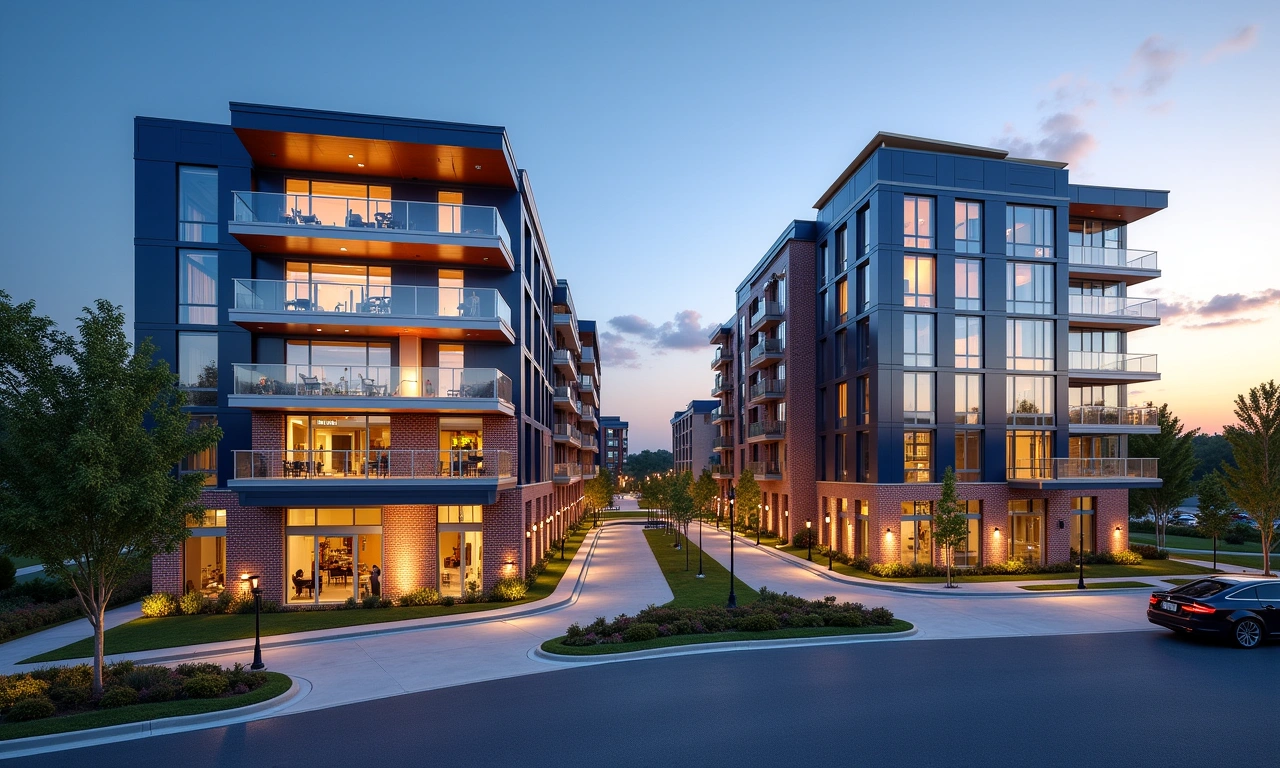
What Institutional JV Partners Look For Differently in Each Market
Institutional JV capital partners evaluate Sandy Springs and Milton through entirely different investment lenses, reflecting each market's fundamental characteristics.
In Sandy Springs, institutional LPs — pension funds, family offices with multifamily mandates, and private equity real estate funds — underwrite to stabilized yield and income growth. The investment thesis is: acquire or develop an asset at an attractive yield-on-cost, grow NOI through rent growth and operational efficiency, and exit to a deeper buyer pool (including institutional buyers) at a stable or compressed cap rate. Scale matters: institutional multifamily capital in Sandy Springs prefers 100+ unit communities with professional property management and institutional-quality reporting. Value-add deals targeting 50–150 basis points of yield expansion are a primary strategy.
In Milton, the institutional investment thesis is fundamentally different. Income yield is not the primary return driver — equity appreciation is. JV partners in Milton are often underwriting to an exit price per acre for land plays, a price per luxury unit for custom home development, or a boutique commercial asset's scarcity value in a market with very limited commercial inventory. The hold period may be longer (3–7 years on land plays), and the return profile is more binary — either the entitlement is obtained and the land value multiplies, or it is not and the land holds its base value. This risk-return profile is better suited to private equity, family office, and operator-led JV structures than large institutional funds requiring quarterly income distributions.
Capital Availability by Deal Type in Each Submarket
Pillar Partners structures JV capital for qualified operators across both submarkets, with specific capital products calibrated to each market's deal types.
For Sandy Springs multifamily acquisitions, bridge financing (8–14%, 12–36 months, senior) is the most common product for value-add acquisitions before repositioning to permanent debt. Mezzanine financing fills the gap above senior bridge proceeds for operators seeking higher leverage. Common equity JV structures with institutional LP capital are available for operators with track records and qualifying assets at 100+ units.
For Sandy Springs office repositioning, bridge financing is the primary transitional product. JV equity structures with institutional partners are selective — office market uncertainty in 2026 requires strong credit tenancy and clear repositioning business plans to attract institutional LP commitment.
For Milton luxury residential and land, the capital structure differs: shorter-term bridge financing on land acquisitions, preferred equity from family office LPs for boutique development projects, and common equity JV structures for experienced luxury residential operators. Land acquisition financing in Milton requires strong sponsor relationships and conservative LTV underwriting given the illiquid exit profile of large-lot Milton land.
For additional submarket context on the Alpharetta market — which bridges Sandy Springs and Milton geographically and in deal-type profile — see our Alpharetta capital stack guide. For more on equity matching for North Fulton operators, see bespoke equity matching. Data on Atlanta Regional Commission development pipelines is available at atlantaregional.org.
Quick Check
See what capital you qualify for in under 3 minutes.
No origination fees for initial capital review. Institutional structures available.
Check Capital Eligibility →Frequently Asked Questions
Is Sandy Springs in Fulton County?
What are typical cap rates in Milton, GA?
Which North Fulton market has more institutional activity — Sandy Springs or Milton?
What deal types work best in Milton, GA?
How does Pillar Partners serve Sandy Springs operators?
Ready to access institutional JV capital for your next deal?
Pillar Partners connects qualified operators with institutional capital for joint ventures, mezzanine financing, and bridge loans across North Fulton County, GA. No origination fees for initial submissions.
Affiliate disclosure: Pillar Partners may earn a referral fee when you access capital through our partners. See our full disclosure policy.
Begin Capital Review →