Woodstock is Cherokee County's most dynamic capital deployment market, combining a genuinely revitalizing historic downtown, a strong workforce housing demand gap, and one of the lowest property tax rates in the Atlanta MSA. For operators working with Pillar Partners, Woodstock represents an emerging market entry point with established community infrastructure — a combination that rarely appears in a single submarket.
The city's population of approximately 39,000 continues to grow at a pace that outstrips new housing supply, creating structural tailwinds for both multifamily and mixed-use operators. The revitalizing Main Street corridor, anchored by new restaurants, breweries, and live-work units, has transformed Woodstock's downtown from a transitional retail district into a destination — and the capital structures that support this transformation are what Pillar Partners is built to deliver.

Downtown Woodstock Revitalization: The JV Equity Case
The historic Main Street redevelopment thesis in Woodstock is fundamentally a live-work-play conversion story. Former low-intensity retail and light-industrial parcels along the Downtown Woodstock corridor are being repositioned as live-work units, mixed-income multifamily, and ground-floor activated retail — a JV-friendly deal structure because each income stream can be separately underwritten and the combined NOI is diversified against single-tenant vacancy risk.
JV equity structures for downtown Woodstock assets typically favor an 80/20 LP/GP split at an 8% preferred return, with the GP promote tied to a stabilized NOI threshold. The revitalization context is important for LP underwriting: the trajectory is clearly upward, which supports a slightly tighter cap rate assumption on exit than a comparable non-revitalization suburban asset would justify.
"Woodstock's 5.70 mill rate and revitalizing downtown core create a rare combination: emerging market yield with established community infrastructure."
Cherokee County Tax Advantage: 5.70 Mills
Cherokee County's property tax rate of 5.70 mills is among the lowest in the Atlanta MSA, and — critically for deal underwriting — it is tied with Holly Springs for the lowest rate in the 10-city comparison set tracked by Pillar Partners, according to published data from the Cherokee County Tax Commissioner. At 5.70 mills, Cherokee operators face a tax burden that is approximately 61% lower than Gwinnett County (14.71 mills) and 58% lower than DeKalb County (13.35 mills).
In practical NOI terms, a $5M stabilized commercial asset at 5.70 mills versus 14.71 mills represents approximately $45,500 in annual tax savings — capital that flows directly to LP distributions in a waterfall structure. For JV operators comparing Cherokee versus Gwinnett deployment opportunities at equivalent entry prices, this tax differential is a direct IRR driver that is often underweighted in initial underwriting.

Workforce Housing JV Structures
The attainable housing gap in Cherokee County is acute: median household incomes have grown faster than the available rental stock, creating persistent demand for workforce housing in the 80–120% AMI band. This demand profile supports JV equity structures where the GP targets workforce housing specifically — a positioning that also opens access to certain LIHTC and subordinate debt programs that can improve the overall stack economics.
Our bespoke equity matching program has structured workforce housing JV deals in Cherokee County with LP preferred equity at 7.5–8.5% returns, GP promotes in the 20–25% range, and hold periods of 5–7 years designed to capture the full revitalization rent growth trajectory. The 5.70 mill rate means that tax load assumptions are relatively conservative in these models, improving LP return predictability over the hold period.
Bridge Financing for Woodstock Acquisitions
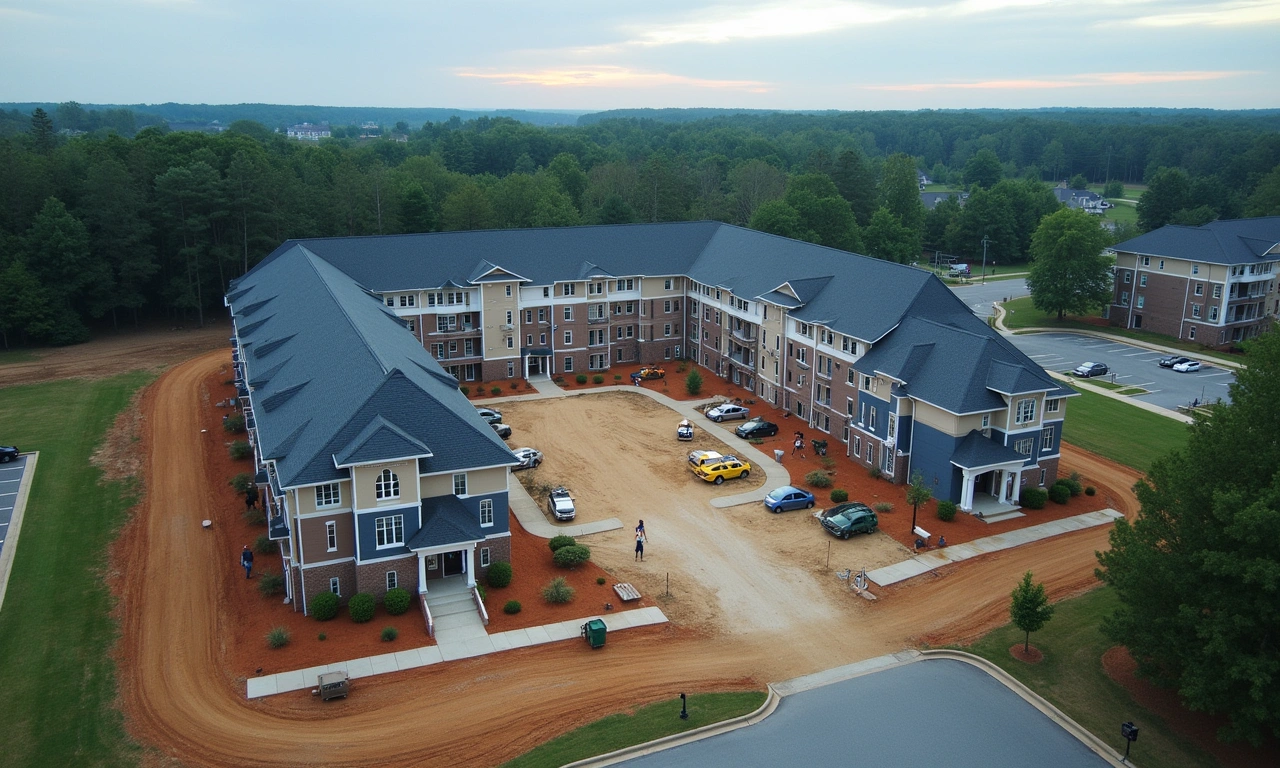
Many Woodstock opportunities present as transitional assets in the downtown revitalization corridor — properties that need repositioning, renovation, or lease-up before permanent financing is available. Our institutional bridge loan program provides 12–24 month capital specifically designed for this acquisition-to-stabilization window, with pricing calibrated to Cherokee County's lower-risk tax environment and Woodstock's improving submarket fundamentals.
Mezzanine Capital for Woodstock Mixed-Use Projects
Ground-up mixed-use development in the downtown Woodstock corridor often requires leverage above the senior debt ceiling — particularly for multi-story projects where construction costs are elevated relative to comparable suburban sites. Mezzanine financing fills this gap, providing capital at the 65–80% LTV layer with coupons in the 11–14% range and terms aligned to the construction-to-stabilization timeline.
Construction standards for mixed-use development in Woodstock's historic downtown corridor are informed by NIST Building Standards, particularly for multi-story wood-frame and podium construction types common in Main Street revitalization projects. Mezzanine lenders underwriting these assets require alignment between construction specifications and local building code requirements, and Georgia State University Real Estate Research provides the Cherokee County submarket context that informs the exit underwriting at loan maturity.
Infographic
Woodstock, GA — Capital Stack Quick Reference
Data Visualization