The office-to-residential conversion opportunity in Atlanta has moved from theoretical to transactional. After years of mounting office vacancy — accelerated by the remote work structural shift that the pandemic catalyzed — Atlanta's office market entered 2026 with a substantial inventory of underperforming suburban and urban fringe office product that cannot be economically repositioned for its original use. At the same time, residential demand across the metro has remained structurally elevated, supported by population growth, household formation, and the persistent preference for well-located rental housing in walkable, amenity-rich environments. The conversion of obsolete office product into residential units addresses both sides of this equation simultaneously — and does so using capital structures that differ meaningfully from both traditional multifamily development and standard office repositioning.
For operators who understand adaptive reuse — the technical complexities of conversion feasibility assessment, the capital stack structures that make conversions pencil, and the zoning navigation required to secure residential use approval on office-zoned parcels — the Atlanta market offers a compelling opportunity set in 2026. Submarkets including Midtown, Buckhead, Cumberland-Vinings, and the Perimeter corridor all have significant office vacancy that has persisted through multiple leasing cycles and is increasingly unlikely to be absorbed by office tenants at any price point. For owners and operators willing to acquire at office-appropriate basis levels and invest conversion capital, the residential value creation potential is significant.
This guide addresses the specific capital questions that adaptive reuse operators face: what makes a building conversion-feasible, what does conversion cost, how is the capital stack structured for a conversion JV, and how do zoning and tax incentive considerations affect deal economics. For market context in the Vinings and Cumberland corridor — one of the most active suburban conversion markets in metro Atlanta — see our analysis of Vinings/Cumberland market intelligence. For the broader Georgia investment context, see our Georgia investment climate 2026 analysis.
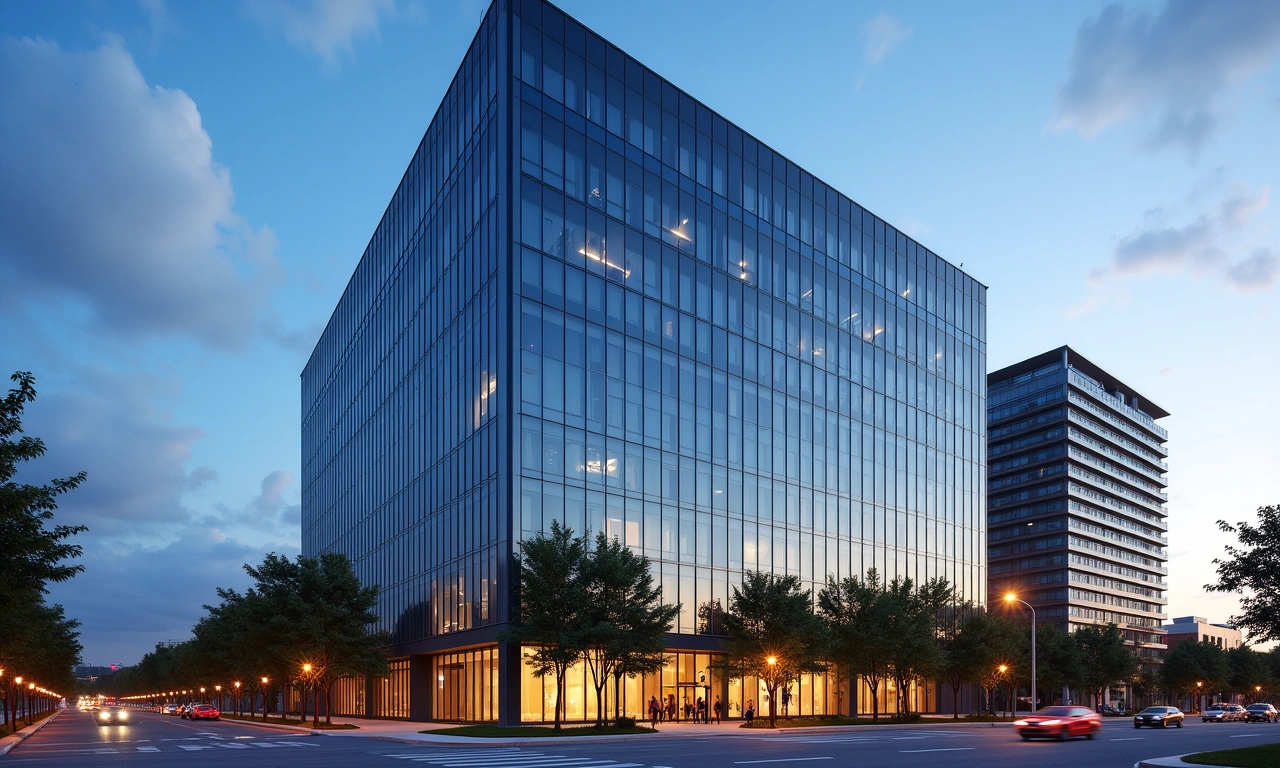
The Atlanta Office-to-Residential Opportunity in 2026
Atlanta's office market entered 2026 with overall vacancy rates hovering above 25% metro-wide, with suburban Class B and Class C product significantly worse — approaching 35–40% vacant in some corridors. This vacancy is not a cyclical phenomenon that will correct with economic recovery; it is structural. The corporate real estate footprint rationalization that accelerated during 2020–2023 has produced permanent reductions in office space demand that have permanently impaired the economics of a significant portion of the existing office stock. Landlords who have held onto this product hoping for an office demand recovery are increasingly recognizing that conversion to an alternative use — primarily residential — is the economically rational path forward.
The conversion economics depend critically on the acquisition basis. Office buildings that are trading at $50–$120 per square foot — well below replacement cost and reflecting their functionally obsolete status — can support conversion economics when combined with $150–$250/SF of conversion capital. The total all-in cost of $200–$370/SF must be justified by the residential value at stabilization, which is determined by the achievable residential rents per square foot and the applicable residential cap rate. In Atlanta's strongest submarkets — Midtown, Buckhead, and the walkable portions of Cumberland-Vinings — residential rents of $2.00–$2.50/SF and cap rates of 4.75–5.25% produce stabilized values of $250–$400/SF, creating the value spread needed for conversion to pencil. In weaker suburban submarkets with lower rents and higher cap rates, the math is more challenging — and many conversion proposals in these markets will ultimately fail the feasibility test.
The Atlanta conversion pipeline has been expanding rapidly as these economics have become more broadly recognized. Active conversion projects are concentrated in Midtown (12 active projects), the Perimeter corridor (9 projects), Cumberland-Vinings (8 projects), Buckhead (6 projects), Decatur (4 projects), and Vinings (3 projects). This pipeline represents a meaningful new supply of residential units that was not in the traditional multifamily development pipeline — sourced from office buildings that were previously counted as office inventory, not residential supply. Understanding where in this pipeline your target property sits — and how much competition from other conversions you will face during lease-up — is an important underwriting consideration for conversion JV investors. For the broader context of recourse financing considerations that apply to conversion deals, see our guide to recourse financing considerations.
Data Visualization
Atlanta Office Conversion Pipeline by Submarket (Active Projects, 2026)
* Illustrative estimates based on publicly available project data. Active pipeline counts as of early 2026.
Conversion Cost Benchmarks and Feasibility Thresholds
The most critical — and most frequently misunderestimated — element of conversion feasibility is the conversion cost per square foot. Unlike ground-up development, where cost benchmarks are reasonably predictable based on unit type, construction quality, and market labor costs, office-to-residential conversion costs vary enormously based on building-specific factors that can only be fully understood after a detailed engineering and architectural assessment. Two buildings with identical floor plates in the same submarket can have conversion cost differentials of $60–$100/SF or more based on differences in structural configuration, existing MEP (mechanical, electrical, and plumbing) conditions, window-line access, and fire-life safety compliance requirements.
The primary cost drivers in Atlanta conversions are: plumbing reconfiguration (the most expensive single component — running new plumbing chases from the central core to perimeter units in a building designed with no perimeter plumbing can cost $30–$50/SF alone), HVAC replacement (commercial systems must be replaced with residential PTAC or split-system units in most conversions), electrical upgrade (residential code requires higher amperage per unit than commercial code), window replacement or addition (older office buildings with fixed glass panels require complete window system replacement to meet residential egress and ventilation requirements), and structural modification (some floor plate configurations require structural steel removal to create viable unit layouts). Operators who underestimate conversion costs — often by relying on comparable residential renovation benchmarks rather than conversion-specific engineering assessments — are the most common source of conversion project failures.
Feasibility thresholds for Atlanta conversions require the stabilized residential value to exceed total all-in cost (acquisition plus conversion plus soft costs plus financing carry) by a margin sufficient to generate the equity returns the JV structure requires. In 2026, institutional LP equity for conversion deals requires 18–24% gross IRR — higher than standard multifamily development returns, reflecting the greater execution risk and technical complexity of adaptive reuse. This return requirement, combined with the cost structure described above, produces a feasibility test: the stabilized value at the projected exit cap rate must exceed total all-in cost by at least 25–35% to produce the required equity returns after the waterfall economics are applied. Buildings that fail this test — typically those with acquisition prices that reflect too much office value rather than appropriate conversion-basis pricing — are not viable conversion candidates regardless of the quality of the proposed residential program.
| Building Type | Typical Acq. Basis | Conv. Cost / SF | All-In / SF | Feasibility |
|---|---|---|---|---|
| Pre-1980, small plate (<20K SF) | $60–$90/SF | $150–$185/SF | $210–$275/SF | High feasibility |
| 1980–1995, mid-plate (20–35K SF) | $70–$110/SF | $175–$215/SF | $245–$325/SF | Moderate feasibility |
| Post-1995, deep plate (>35K SF) | $80–$130/SF | $210–$260/SF | $290–$390/SF | Challenging; site-specific |
| Historic (pre-1936) | $90–$140/SF | $185–$240/SF | $275–$380/SF | High (with HTC benefit) |
Capital Stack for Office Conversions: Debt and JV Equity Structures
The capital stack for an office-to-residential conversion is structurally similar to a ground-up multifamily development — an acquisition/conversion loan, an optional mezzanine debt or preferred equity layer, and JV equity (LP plus GP) — but the underwriting of each layer reflects the specific risk profile of adaptive reuse. The primary debt instrument is typically a bridge loan that funds the acquisition and the conversion work through a construction holdback mechanism identical to that used in standard renovation bridge loans. The key difference is the underwriting basis: bridge lenders for conversion deals underwrite against as-converted residential value, not office value, which requires the lender to have confidence in both the conversion execution and the residential market at stabilization.
Bridge lenders for Atlanta office conversions in 2026 are typically pricing at SOFR plus 350–475 basis points, with loan sizing at 65–72% of as-converted appraised value. The as-converted appraisal — which projects the stabilized residential value after conversion is complete — is the most important and most contested document in the conversion financing process. Appraisers must make assumptions about conversion timeline, unit mix, achievable rents, and expense ratios for a property that doesn't yet exist in its converted form, using comparable residential projects in the same submarket as the primary reference. Finding lenders and appraisers with genuine office conversion experience in Atlanta is a critical first step — generalist bridge lenders who lack conversion experience will often be overly conservative in their as-converted value assumptions, producing loan proceeds that are insufficient to make the deal work. Pillar Partners maintains relationships with bridge lenders who have active conversion lending programs in Atlanta and can underwrite the as-converted residential value with appropriate market knowledge.
The JV equity structure for conversion deals reflects the elevated complexity premium. GP promote is typically 25–30% for conversion deals versus the standard 20% for multifamily development — recognizing that the GP's specialized conversion expertise (feasibility assessment, structural engineering coordination, zoning navigation, historic tax credit structuring) is a genuine value driver that commands additional economic compensation. LP equity investors targeting 18–24% gross IRR for conversion deals contribute 85–90% of equity, with the GP contributing 10–15% — a slightly higher GP co-invest requirement than for standard multifamily, reflecting the elevated risk that institutional LPs are accepting. The preferred return for conversion JVs is typically 8–9% simple, consistent with other institutional equity JV structures. For tax-advantaged structure considerations including historic tax credits and Opportunity Zone stacking, see our guide to tax-advantaged structures. For a comparison of bridge and mezzanine instruments for conversion deals, see our guide to bridge vs. mezzanine for conversions.
Zoning, Permitting, and Entitlement Considerations
The zoning and permitting pathway for an office-to-residential conversion is one of the most underappreciated risk factors in adaptive reuse underwriting. Many operators assume that converting an office building to residential use is a straightforward administrative process — but in Atlanta and North Fulton County, the reality is considerably more complex. Office-zoned properties in Georgia's major jurisdictions typically require a rezoning or special use permit to authorize residential use, unless the existing zoning already includes residential as a permitted or conditional use. The rezoning process — with its public notice requirements, planning commission review, and city/county council approval — can take 6–18 months and carries the binary risk of denial or material conditions that alter the project's economics.
In Atlanta's core, some jurisdictions have adopted adaptive reuse or mixed-use overlay districts that streamline the conversion approval process for qualifying buildings — reducing or eliminating the need for a full rezoning. DeKalb County, the City of Atlanta, and several other jurisdictions have introduced specific adaptive reuse policies in response to the office vacancy crisis, recognizing that bureaucratic barriers to conversion are counterproductive to housing supply goals. Operators should engage a local land use attorney with specific experience in their target jurisdiction's adaptive reuse framework before finalizing any acquisition — the cost of this legal guidance ($10,000–$30,000) is negligible relative to the risk of acquiring a property that cannot be converted without a rezoning that the jurisdiction is unlikely to approve.
Building code compliance for residential conversion adds another layer of complexity beyond zoning. Converting an office building to residential use triggers the requirement to bring the building into compliance with residential building code — which has meaningfully different requirements than commercial code for fire suppression, egress, electrical service, ventilation, and accessibility. A building that was fully code-compliant as an office may require substantial capital investment to meet residential requirements that have no office equivalent. Fire separation between units (1-hour rated assemblies in most cases), individual unit egress windows, residential HVAC systems, and ADA-compliant common areas are all elements that must be documented in the conversion permit application and funded in the conversion budget. The gap between the initial budget estimate (often based on conceptual architectural drawings) and the final budget (based on detailed engineering and construction documents) is typically 15–25% on conversion projects — a contingency factor that must be explicitly incorporated into the JV underwriting. Understanding these cost dynamics is essential before presenting a conversion opportunity to institutional LP capital; our guide to the JV package that gets funded details how to present conversion risk and mitigation to sophisticated capital sources.
Quick Check
See what capital you qualify for in under 3 minutes.
No origination fees for initial capital review. Institutional structures available for qualified North Fulton operators.
Check Capital Eligibility →Frequently Asked Questions
What office buildings are best candidates for residential conversion? ▾
What does office-to-residential conversion cost per SF in Atlanta? ▾
What JV structures work for Atlanta office conversions? ▾
Do Atlanta office conversions qualify for any tax incentives? ▾
What is the typical hold period for an office conversion JV? ▾
Ready to access institutional JV capital for your next deal?
Pillar Partners connects qualified operators with institutional capital for joint ventures, mezzanine financing, and bridge loans across North Fulton County, GA. No origination fees for initial submissions.
Affiliate disclosure: Pillar Partners may earn a referral fee when you access capital through our partners. See our full disclosure policy.
Begin Capital Review →