Vinings and the Cumberland/Galleria corridor represent one of the most structurally complex — and most institutionally compelling — real estate investment environments in the entire Atlanta MSA. The submarket combines Vinings' premium residential character, among the highest household income concentrations in Cobb County, with Cumberland/Galleria's corporate office and hotel infrastructure, which is experiencing the kind of sustained vacancy increase that historically precedes a wave of adaptive reuse and conversion development. For operators with the expertise and capital capacity to navigate office-to-residential conversion, this submarket is generating the most interesting deal flow in metropolitan Atlanta in 2026.
The Cumberland/Galleria office market has experienced vacancy creep from approximately 18% in 2022 to an estimated 24–26% in 2026, as hybrid work patterns, tenant consolidations, and the flight-to-quality dynamic have hollowed out aging Class B office inventory while simultaneously strengthening Class A rents and occupancy. This bifurcation — strong demand for premium space, structural oversupply of older product — is the fundamental investment thesis for the corridor's next cycle: acquire vacant or underoccupied Class B office at distressed pricing, convert to residential or mixed-use, and capture the substantial gap between current office value and residential conversion value in a submarket with genuinely premium residential demand.
"Cumberland's 24–26% office vacancy is not a market failure — it is a market signal. The signal is that a generation of Class B office product is ready for its highest and best use transition: residential conversion in a premium-income submarket."
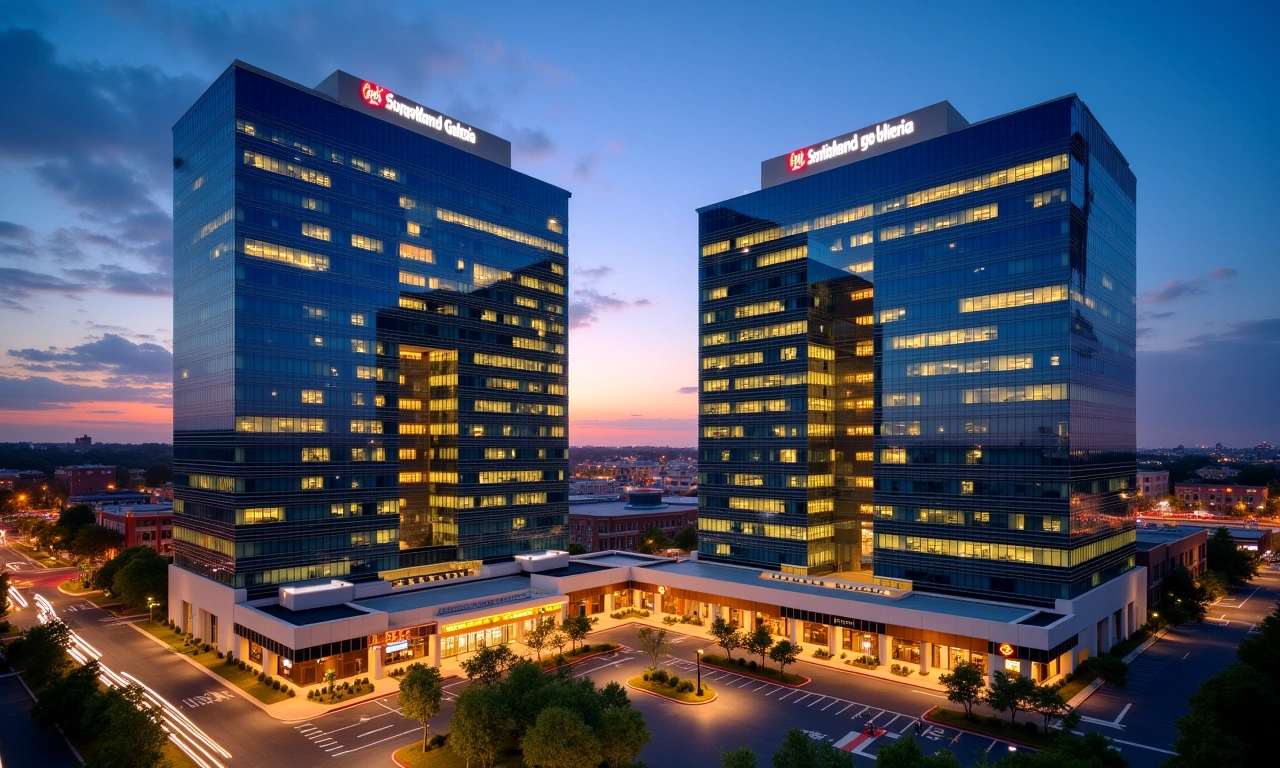
Vinings and Cumberland: Atlanta's Premium Mixed-Use Frontier
The Vinings enclave — the unincorporated Cobb County community between I-285 and the Chattahoochee River — is one of Atlanta's most recognizable premium residential addresses. Household incomes averaging $110,000–$130,000, proximity to the river greenway and Atlanta Braves' Truist Park complex, and a boutique retail and restaurant scene anchored by Vinings Jubilee create the residential demand foundation that makes conversion and development in the broader Cumberland corridor viable at premium price points. Developers who can deliver residential product that captures the Vinings lifestyle premium — whether through office conversion, mixed-use infill, or premium multifamily — access a tenant and buyer pool that is among the strongest in the Atlanta MSA.
The Cumberland/Galleria district — roughly bounded by I-285, Cobb Parkway, the Chattahoochee, and US-41 — is one of Atlanta's most significant suburban employment centers. The district hosts approximately 30 million square feet of office, hotel, convention, and mixed-use space, making it comparable in scale to Perimeter Center and significantly larger than any North Fulton office concentration. The Cobb Galleria Centre, SunTrust Park (Truist Park), and the Battery Atlanta entertainment complex anchored the district's evolution from a pure office market toward a mixed-use entertainment and residential destination — a transition that is now accelerating as office vacancy creates the land economics for conversion projects that could not be underwritten when the same buildings were generating office income at 2019 occupancy levels.
The cap rate environment for distressed Class B office in the Cumberland corridor has widened significantly from the 6.5–7.0% range in 2022 to 8.0–10.0%+ for buildings with significant vacancy and near-term lease roll, reflecting both the deteriorating income profile and the lender reluctance to provide debt capital for conventional office refinancing. This cap rate widening — combined with the residential conversion value potential at 4.8–5.5% stabilized residential cap rates — creates a value-gap that is the financial engine of the office-to-residential conversion thesis. Operators who can close the gap between distressed office pricing and residential conversion value are capturing a structural repricing opportunity that appears once or twice in a market cycle.
Understanding the full scope of the Vinings and Cumberland capital opportunity requires operators to study not just the conversion thesis but also the broader mixed-use development pipeline. The Battery Atlanta has demonstrated that premium mixed-use environments in this corridor can command rents and prices at or above Buckhead levels — a revelation that has recalibrated developers' assumptions about achievable pricing for new residential and retail product throughout the submarket. Our complete guide to capital stack fundamentals provides the financial framework for evaluating these complex mixed-use capital structures.
Office-to-Residential Conversion Capital Structures
Office-to-residential conversion deals in the Cumberland corridor require a capital structure that reflects the elevated construction risk, the extended timeline, and the higher equity requirement that conversion projects demand relative to conventional acquisitions or even ground-up development. The typical conversion capital stack runs 60–65% senior debt (construction lender), 10–15% mezzanine debt or preferred equity, and 25–30% common equity split between the GP and the institutional LP. This is a more equity-intensive structure than standard multifamily — 30–40% equity versus 25–30% for ground-up — and the reason that institutional LP co-investment is essentially non-negotiable for conversion deals above $20M. See our office-to-residential conversion guide for full detail on the Atlanta-specific structural requirements.
The senior construction loan for a Cumberland office conversion is underwritten against the projected post-conversion residential value, not the current office value — which is a critical distinction. Lenders advancing 60–65% of total project cost (acquisition plus conversion) on a building that was last sold at a fraction of the conversion cost are effectively underwriting the residential value creation. This means the lender must be confident in the conversion methodology, the residential absorption projections, and the developer's execution capability. Third-party feasibility studies — from national residential market research firms — are standard requirements for conversion lenders, as is a pre-leasing or pre-sales commitment target that demonstrates demand before the lender closes the construction loan.
Mezzanine financing for Cumberland office conversion deals is priced at 10–14%, with interest reserves required for the full conversion and lease-up period. The mezzanine layer is essential because the construction loan LTC cap (65%) leaves a meaningful gap in a deal where acquisition plus conversion costs can easily reach $200–$280/SF on a full repositioning. Mezzanine lenders for conversion deals require experienced developers, detailed conversion plans, and often a completion guarantee from the GP entity or a creditworthy affiliate. Our comprehensive mezzanine financing guide covers the documentation and structural requirements that Cumberland mezzanine lenders apply to conversion deals.
The waterfall structure for LP equity in a Cumberland conversion deal is calibrated to compensate the LP for the elevated construction and execution risk. Standard structures run an 8–9% preferred return with an 80/20 split on residual profits, but many conversion deals include a tiered promote — the GP's promote steps up to 30% above a 15% IRR hurdle and 35% above 20% IRR — to incentivize the GP to maximize residential value and absorption velocity. The LP co-invest of 85–90% of total equity means the LP has substantial downside exposure if the conversion underperforms, making the LP's due diligence process for conversion deals considerably more intensive than for standard acquisitions. For a detailed comparison of recourse vs. non-recourse structures as they apply to conversion deals, see our dedicated guide.
| Deal Parameter | Office-to-Residential Conversion | Ground-Up Multifamily (Comparable) |
|---|---|---|
| Senior Debt LTC | 60–65% | 70–75% |
| Mezzanine / Pref Equity | 10–15% of project cost | 5–10% of project cost |
| Equity Requirement | 30–40% of total cost | 25–30% of total cost |
| LP Preferred Return | 8–10% | 8% |
| GP Promote (base tier) | 20% above pref hurdle | 20% above pref hurdle |
| Typical Timeline | 24–36 mo conversion + 12 mo lease-up | 18–24 mo construction + 6–12 mo lease-up |
| Min. Project Size (Institutional) | $20M+, 50,000 SF+ | $5M+ |
Cumberland Galleria Submarket: Deal Intelligence for 2026
The Cumberland Galleria submarket's office vacancy trajectory is the defining deal intelligence factor for 2026. Vacancy has increased from approximately 19% in 2024 to an estimated 24–26% in 2026, with the increase concentrated in Class B buildings — structures built in the 1980s and 1990s that lack the floor plates, amenity packages, and HVAC efficiency that today's hybrid-work tenants require. Class A buildings in the same submarket have held or improved occupancy, confirming the flight-to-quality bifurcation that characterizes most major U.S. office markets in the current cycle. This bifurcation means operators can target Class B buildings for conversion without competing with ongoing Class A demand — the two segments are effectively separate markets within the same geographic zone.
The conversion economics for a representative Cumberland Class B building — 100,000 SF acquired at $85/SF ($8.5M) with $145/SF conversion cost ($14.5M) and a post-conversion residential value of $310/SF ($31M) — generate a gross equity multiple of approximately 1.34x on total project cost of $23M. This multiple is lower than ground-up development returns but is achieved on a shorter timeline (fewer entitlement risks, existing structure) and with a more predictable cost basis (structural system is known, not estimated from foundation). The conversion basis advantage — acquiring existing structural improvements at a fraction of replacement cost — is the fundamental financial rationale for the conversion thesis, and it is most compelling in the Cumberland corridor where office distress has pushed acquisition pricing to generational lows relative to residential replacement cost.
The Battery Atlanta and Truist Park complex — the mixed-use entertainment anchor on the district's western edge — continues to generate positive spillover effects for the surrounding submarket. Residential communities within walking or biking distance of The Battery consistently command rent premiums of 8–15% over comparable product without the amenity proximity, and this premium has held through the office market's deterioration because it is driven by entertainment demand, not office employment. Developers positioning conversion or ground-up residential product to capture The Battery proximity premium can underwrite achievable rents at the higher end of the submarket range, which in turn supports the equity math at current office acquisition pricing.
For operators comparing Cumberland to the adjacent Smyrna real estate investment market: Smyrna offers a more accessible entry point for value-add multifamily, while Cumberland offers the conversion and mixed-use development opportunity that requires more capital but generates proportionally larger absolute returns per deal. Operators with the capital capacity and conversion expertise to execute a Cumberland office conversion are accessing a deal type that most suburban Atlanta operators cannot pursue — which means less competition for acquisition targets and more LP capital interest per deal. The two submarkets are complementary deployment targets for a capital program that spans deal sizes and strategies.
Data Visualization
Cumberland Office Vacancy vs. Metro Average — 2024 to 2026 (Est.)
* Illustrative estimates. Not investment advice. Actual vacancy data varies by source and building class.
Mezzanine and JV Capital for Vinings Acquisitions
Beyond the office conversion opportunity, the Vinings submarket itself generates a steady flow of conventional JV equity and mezzanine financing deals — premium multifamily acquisitions, boutique mixed-use developments along the Paces Ferry Road corridor, and commercial repositioning deals in the neighborhood's aging retail inventory. These conventional deals benefit from Vinings' demographic premium and can be underwritten to institutional LP standards without the construction complexity of office conversion, making them more accessible to operators who have strong multifamily or retail track records but have not yet completed a conversion project.
Premium multifamily in Vinings — specifically in the submarket bounded by I-285, the Chattahoochee, Paces Ferry Road, and US-41 — trades at cap rates of 4.8–5.2% for Class A product, reflecting the demographic premium that distinguishes Vinings from the broader Cobb County market. Institutional LP capital sources who underwrite Vinings multifamily deals consistently identify the submarket's income demographics — household incomes averaging $110,000–$130,000 — as the primary underwriting anchor, as this income base supports rents that are substantially above the Cobb County average and consistent with North Fulton premium markets. Operators who can acquire and reposition Vinings multifamily product at the right basis access a market where the NOI per unit is among the highest in Cobb County.
The mezzanine and preferred equity market for Vinings acquisitions is active but selective. Institutional mezzanine lenders advancing capital into Vinings deals require the same documentation as any institutional transaction — third-party appraisal, Phase I environmental, third-party property condition assessment — plus a demonstrated understanding of the Vinings submarket that confirms the GP's ability to underwrite to local market conditions rather than generic Atlanta MSA assumptions. The mezzanine rate for Vinings premium multifamily runs 10–13%, reflecting the submarket's relative quality, with preferred equity achieving similar economics at slightly more flexible repayment terms. For full structural detail on these financing options, see our guide to mezzanine financing and the complementary overview of recourse vs. non-recourse structures for Atlanta suburban deals.
The SPE structuring requirements for Vinings conventional deals follow standard institutional practice: single-purpose LLC at the property level, clean title, environmental Phase I clearance, and a JV operating agreement that specifies the LP waterfall, major decision rights, and exit provisions with sufficient specificity to avoid post-closing governance disputes. Operators new to institutional deal structuring in the Vinings submarket should engage counsel familiar with both Georgia real estate law and institutional LP documentation standards, as the intersection of the two creates complexities that general practitioners may not anticipate. The full framework for building a compliant and bankable deal package is covered in our capital stack fundamentals guide.
Quick Check
See what capital you qualify for in under 3 minutes.
No origination fees for initial capital review. Institutional structures available for qualified operators.
Check Capital Eligibility →Frequently Asked Questions
What makes Vinings/Cumberland attractive for institutional JV capital? ▾
What office conversion deals qualify for institutional financing? ▾
What mezzanine rates apply to Cumberland office conversions? ▾
How does the capital stack differ for office-to-residential vs. ground-up development? ▾
Does Pillar Partners work with developers on office conversion deals? ▾
Ready to access institutional JV capital for your next deal?
Pillar Partners connects qualified operators with institutional capital for joint ventures, mezzanine financing, and bridge loans. No origination fees for initial submissions.
Affiliate disclosure: Pillar Partners may earn a referral fee when you access capital through our partners. See our full disclosure policy.
Begin Capital Review →