Smyrna, Georgia sits at the intersection of Cobb County's two most powerful real estate demand forces: the Cumberland/Galleria employment concentration to the east, which anchors Cobb County's largest office and hotel market, and the residential growth pressure radiating outward from Atlanta's urban core along the I-285 and US-41 corridors. For value-add real estate operators, this intersection creates a precisely defined opportunity — acquire vintage 1990s–2000s multifamily at reasonable basis levels, execute a targeted renovation program, and benefit from the rent premium that Cumberland/Galleria employment proximity generates in Smyrna's tightest neighborhoods.
Smyrna's value-add thesis is supported by fundamentals that institutional LP capital consistently validates: a median household income of approximately $72,000–$80,000 that is rising as higher-income workforce renters choose Smyrna over more expensive Buckhead and Midtown alternatives; an apartment vacancy rate that has held below 5% for most of the past three years; and a relatively limited new multifamily supply pipeline that constrains the competitive pressure on renovated existing product. These three dynamics — rising income, low vacancy, constrained supply — create the conditions where a well-executed value-add renovation program generates outsized risk-adjusted returns.
"Smyrna is where Cumberland/Galleria's employment base meets an affordable residential stock that hasn't yet repriced to reflect the workforce demand. That gap is the value-add thesis."
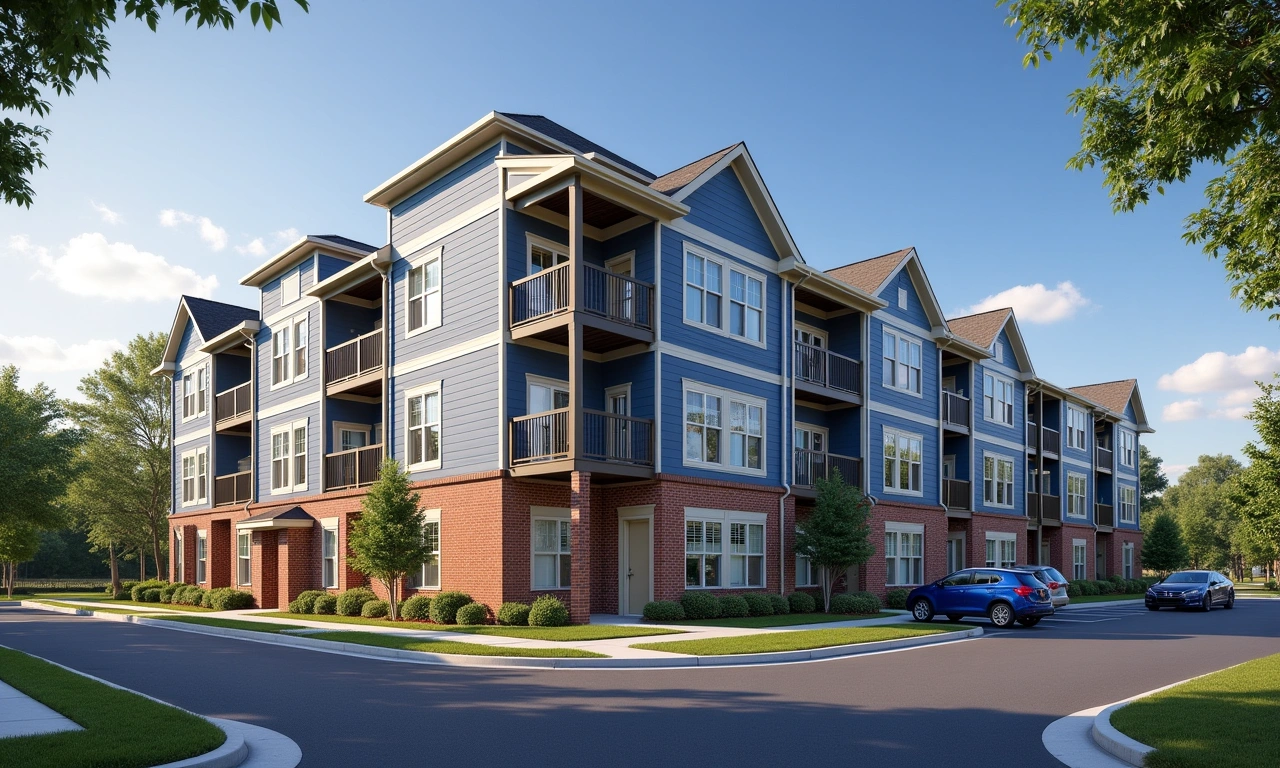
Why Smyrna Is a Prime Value-Add Market in 2026
The value-add opportunity in Smyrna is most concentrated in three geographic corridors: the Atlanta Road / US-41 corridor from Smyrna Market Village south toward Vinings, the Spring Road corridor connecting Smyrna to the Vinings Jubilee retail cluster, and the South Cobb Drive belt of 1990s vintage apartment communities that offer the largest unit counts at the most accessible per-unit acquisition basis. Each corridor has distinct submarket dynamics, but all three share the common characteristic that drives institutional LP capital interest: current rents are meaningfully below market levels for renovated product, and the renovation capital required to close that gap is well within the range that institutional bridge financing can support.
The cap rate environment in Smyrna's multifamily market runs 5.5–6.2% on unrenovated vintage product and compresses to 5.0–5.5% on recently renovated communities with strong rent rolls. This 50–70 basis point cap rate spread between unrenovated and renovated product is the financial engine of the value-add thesis: if an operator can acquire at 5.8–6.0%, spend $35,000 per unit in renovation capital, and stabilize at a 5.2% NOI-based cap rate, the value creation per unit is substantial — typically $25,000–$40,000 per unit in equity appreciation above the renovation cost. This spread justifies the 18–24 month bridge financing and renovation program that value-add deals require.
The Smyrna Market Village area — the mixed-use town center that anchors Smyrna's walkable identity — has been a catalyst for the submarket's residential repricing. The Village's combination of retail, restaurant, and residential functions, combined with the City of Smyrna's investment in streetscaping and public space, has created a walkability premium that radiates outward from the Village into the surrounding residential corridors. Multifamily communities within a half-mile of Smyrna Market Village consistently command rent premiums of 8–15% over comparable communities without walkable amenity access. Operators who target acquisitions in this proximity benefit from a structural demand advantage that supports post-renovation rents at the higher end of the submarket range.
The retail value-add opportunity is a separate but complementary thesis. Atlanta Road's aging strip retail centers — 1980s-vintage properties with expiring national tenant leases and deferred maintenance — represent repositioning candidates for experiential retail, medical office, or mixed-use infill development. These deals typically require bridge loan financing for acquisition and a 12–18 month repositioning period before either permanent debt refinancing or sale. Our guide to value-add real estate financing in Georgia covers the capital structures that apply to both multifamily and retail repositioning deals in markets like Smyrna.
Value-Add Capital Structures for Smyrna Multifamily
The capital structure for a Smyrna value-add multifamily acquisition typically involves four components: a bridge loan at 65–70% LTV on the as-is acquisition value, a renovation draw facility that advances capital against completed renovation milestones, LP equity funding the gap between the bridge loan and total project cost, and GP equity representing the operator's co-investment commitment. Understanding how these four components interact — and how the sequencing of capital deployment affects both the renovation timeline and the LP's return — is essential to structuring a deal that attracts institutional capital.
Bridge loans for Smyrna value-add in 2026 are priced at SOFR plus 350–500 basis points, with 18–24 month initial terms and 6–12 month extension options that require the borrower to meet predetermined renovation milestones. The DSCR test is typically waived during the renovation period, with the lender instead monitoring renovation progress and occupancy against the underwritten business plan. Interest reserves covering the full initial term — funded at closing — are standard for Smyrna value-add bridge loans, ensuring that debt service is current even during periods when units are offline for renovation. See our analysis of 2026 bridge loan rates for current pricing benchmarks across the Atlanta MSA.
LP equity for Smyrna value-add deals is structured with an 8% preferred return on invested capital, with an 80/20 waterfall split (LP/GP) on residual profits above the preferred return hurdle. The GP's promote of 20% on residual profits is the primary incentive alignment mechanism — ensuring that the GP is motivated to maximize post-renovation NOI and exit value, not just complete the renovation on time. The GP co-invest requirement — typically 10–20% of total equity — provides additional alignment, as the GP shares in both the upside and the downside proportional to their invested capital. Our comprehensive guide to institutional bridge loans covers the draw mechanics and covenant packages that Smyrna value-add bridge lenders require.
The SPE structure for Smyrna value-add deals follows standard institutional requirements: a single-purpose LLC at the property level, a separate GP entity, and a JV operating agreement that governs the capital contributions, distribution waterfall, major decision rights, and exit provisions. For operators who want to review a model JV operating agreement structure before approaching LP capital, our JV package that gets funded guide covers the key negotiating points that institutional LPs focus on in deal documentation.
| Metric | Unrenovated (As-Is) | Post-Renovation Target | Delta / Upside |
|---|---|---|---|
| Avg Purchase Price / Unit | $145,000 | — | Acquisition basis |
| Renovation Cost / Unit | — | $38,000 | Capital deployed |
| Post-Reno Value / Unit | — | $215,000 | Exit basis |
| Net Gain / Unit | — | $32,000 | Value created above total cost |
| Rent Premium (post-reno) | $1,350/mo avg | $1,575/mo avg | +$225/mo (+16.7%) |
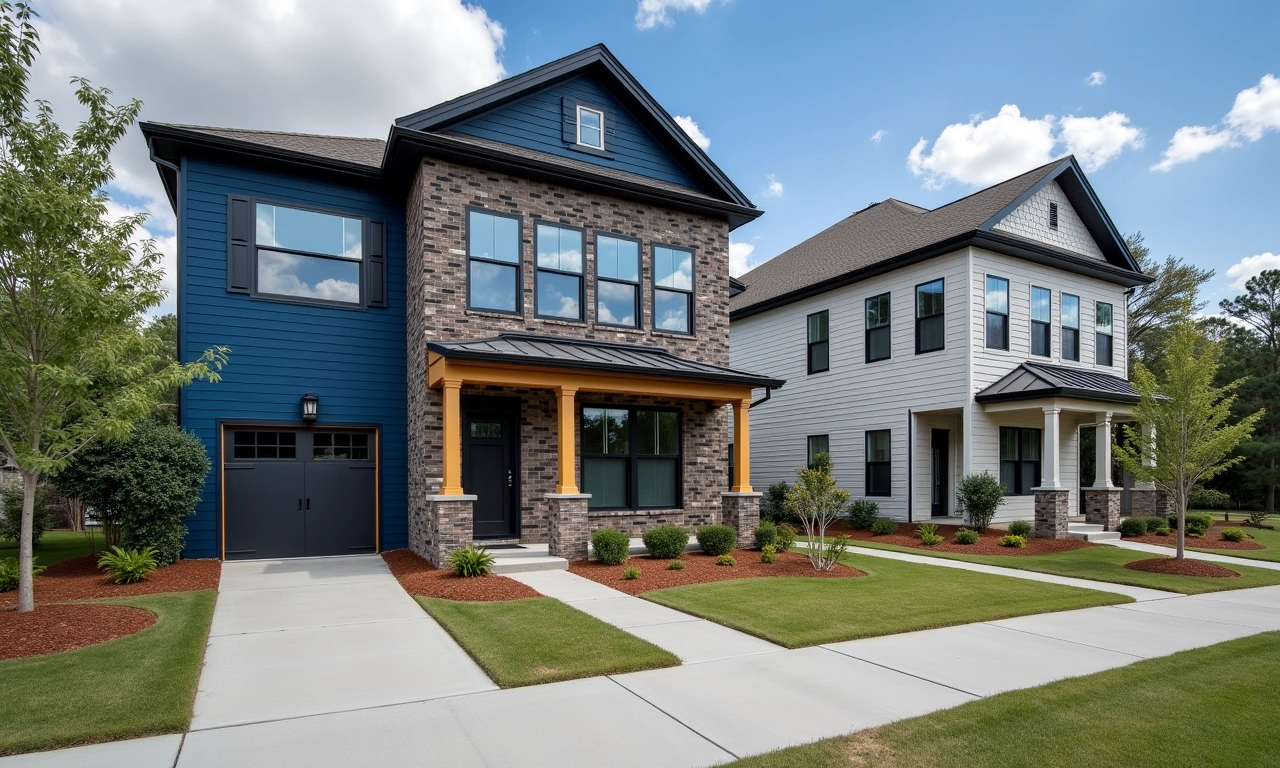
Cumberland/Galleria Proximity: A Capital Advantage
The Cumberland/Galleria employment center — the dense concentration of Class A office, hotel, and conference space anchored by the Cobb Galleria Centre on the Smyrna-Vinings border — is the single most important demand driver for Smyrna multifamily. The approximately 150,000 workers who commute to the Cumberland/Galleria employment zone daily represent a massive workforce rental demand base, and Smyrna's position as the most accessible and affordable residential market within a 5-minute drive of Cumberland creates a structural competitive advantage for Smyrna multifamily over more distant suburban alternatives.
Institutional LP capital sources who underwrite Smyrna value-add deals consistently identify Cumberland/Galleria proximity as the primary demand side underwriting anchor. In LP due diligence, the standard analysis compares Smyrna rents to those in comparable Atlanta submarkets without the same employment proximity — the rent premium attributable to Cumberland access typically runs $80–$150/month per unit, which at a 5.0–5.5% stabilized cap rate translates to $17,000–$33,000 per unit in additional property value. This employment proximity premium is the fundamental reason that Smyrna value-add deals consistently outperform the broader Atlanta suburban multifamily market on a risk-adjusted basis.
For the complete analysis of the Vinings/Cumberland capital stack, including the office-to-residential conversion opportunity that is transforming the Cumberland submarket itself, see our dedicated guide. Operators working in both Smyrna and Vinings/Cumberland benefit from understanding the full geographic scope of the employment center's influence on residential demand — a submarket that extends from Smyrna's Atlanta Road corridor east to the I-285/Cobb Parkway interchange and south to the Chattahoochee River.
The rental comp set for Smyrna value-add underwriting should include properties in both the immediate Smyrna submarket and the adjacent Vinings and Cumberland submarkets, as these three zones function as a unified residential market from a tenant's perspective. Operators who underwrite Smyrna deals using only intra-Smyrna comps often underestimate post-renovation achievable rents, because the Vinings and Cumberland submarkets set the ceiling that Smyrna's highest-quality renovated communities can approach. Our guide to current 2026 bridge loan rates across the Atlanta MSA provides the financing cost benchmarks operators need to model Smyrna value-add returns accurately.
Data Visualization
Smyrna Value-Add Multifamily Deal Metrics (Per Unit, $000s)
* Illustrative estimates per unit basis. Not investment advice. Actual figures vary by property and market conditions.
JV Equity and Bridge Financing for Smyrna Acquisitions
Accessing institutional JV equity and bridge financing for Smyrna value-add acquisitions requires operators to present a deal package that combines rigorous local market analysis with a clear capital structure plan and a credible renovation execution track record. Institutional LPs who evaluate Smyrna deals are experienced Atlanta MSA investors — they know Smyrna's submarket, they have their own rent comp data, and they will quickly identify underwriting assumptions that are too aggressive or too conservative. The best Smyrna deals close LP capital quickly because the operator's underwriting assumptions match or are confirmed by the LP's independent market research.
The renovation execution plan is the second critical dimension of Smyrna deal underwriting. LP capital sources want to see a detailed renovation scope — unit-by-unit or building-by-building as appropriate — with a fixed-price general contractor relationship, a phased renovation timeline that minimizes occupancy disruption, and a per-unit renovation cost that is supported by at least two or three comparable completed renovations in the same or adjacent submarket. Operators who are presenting their first Smyrna value-add deal to institutional LPs should plan to provide a detailed renovation case study from a prior comparable project, as this substitutes for the track record that repeat institutional operators have established through prior LP relationships.
Bridge financing for Smyrna value-add in 2026 is available from a range of institutional lenders — debt funds, bank bridge programs, and CMBS transitional lenders — with rate spreads ranging from SOFR plus 350 basis points for best-in-class operators on well-located assets to SOFR plus 550 basis points for first-time Smyrna borrowers or assets with higher repositioning risk. Our comprehensive guide to institutional bridge loans covers the documentation requirements, draw mechanics, and extension option structures that Smyrna bridge lenders require. Operators who want a preliminary bridge loan sizing and term range for their specific Smyrna deal can access a 48-hour capital review through Pillar Partners' capital access portal.
The exit strategy is the final element of institutional LP evaluation for Smyrna value-add deals. The two primary exit paths — permanent debt refinancing upon stabilization or outright sale — must both be underwritten at deal inception, with the operator demonstrating awareness of current permanent lender appetite for Smyrna stabilized multifamily and the current cap rate expectation that sale-oriented buyers apply. For operators who plan a refinancing exit, agency debt (Fannie Mae/Freddie Mac) is typically available at 70–75% LTV on stabilized Smyrna multifamily with strong rent rolls, providing a clean exit from the bridge loan and the ability to return LP equity from refinancing proceeds. See the full JV package that gets funded guide for the complete documentation and underwriting package that institutional LP capital requires.
Quick Check
See what capital you qualify for in under 3 minutes.
No origination fees for initial capital review. Institutional structures available for qualified operators.
Check Capital Eligibility →Frequently Asked Questions
What value-add deals work in Smyrna, GA? ▾
What bridge loan terms are typical for Smyrna value-add? ▾
How does the Cumberland/Galleria submarket affect Smyrna deal underwriting? ▾
What equity structures do institutional LPs prefer for Smyrna value-add? ▾
What renovation budgets qualify for JV financing in Smyrna? ▾
Ready to access institutional JV capital for your next deal?
Pillar Partners connects qualified operators with institutional capital for joint ventures, mezzanine financing, and bridge loans. No origination fees for initial submissions.
Affiliate disclosure: Pillar Partners may earn a referral fee when you access capital through our partners. See our full disclosure policy.
Begin Capital Review →